
Bitcoin Buying Made Simple Your Ultimate Starter Guide
Buying Bitcoin can feel unfamiliar at first. Get a clear starter guide to the process, key basics, and choices to consider before you begin.
Direct link: Bitcoin Buying Made Simple Your Ultimate Starter Guide
How to Buy Bitcoin A First-Purchase Guide
Your first Bitcoin purchase can feel harder than it needs to. You can buy Bitcoin in a few steps, but its price can swing sharply. Only risk money you can afford to lose.
A sensible start means learning the basics, choosing where to buy, reviewing your order, and protecting your access afterward.
What to know before you buy Bitcoin
Bitcoin is a digital asset recorded on a public blockchain. You can purchase a fraction of one Bitcoin, so you don't need the price of a whole coin to get started. Its value can rise or fall sharply, returns aren't guaranteed, and consumer protections may be limited.
Decide how much you can afford to risk
Set a budget around your actual finances, including bills, emergency savings, and other commitments. Don't borrow money to invest. Then consider why you're buying and how you'd react if the value dropped soon after your purchase. A smaller first order can help you learn the process without putting too much at stake.
Know the difference between an exchange and a wallet
An exchange lets you buy and sell Bitcoin. A wallet lets you access and manage it. An exchange may hold Bitcoin for you, which is convenient if you're new to it. With a self-custody wallet, you control the private keys needed to spend it. That control also makes you responsible for keeping those keys safe.
Bitcoin buying made simple: Where to buy Bitcoin
Your options depend on where you live. Before signing up, check which services, payment methods, and identity requirements apply in your location.
Start with a reputable cryptocurrency exchange
Coinbase, Kraken, and Gemini are examples of exchanges you can research, not endorsements. Compare local availability, security features, regulatory status, payment options, and customer support. Look at the full quoted cost before choosing one, since a familiar name doesn't guarantee the lowest price. Most exchanges require an account, and you may need to verify your identity before buying or withdrawing.
Compare P2P marketplaces, Bitcoin ATMs, and OTC brokers
Peer-to-peer (P2P) marketplaces connect you with individual sellers. Check seller history and use the platform's safeguards; never send payment outside its protected trade process. Bitcoin ATMs offer a way to buy Bitcoin with cash, though fees and exchange rates can make them costly. Verify the machine and its operator before using it. Over-the-counter (OTC) brokers generally handle larger trades and may offer direct assistance, but their terms still deserve careful review.
How to make your first Bitcoin purchase
Exchange screens differ, but the basic sequence stays similar: open an account, select a payment method, place an order, and check the result.
Set up and fund your account
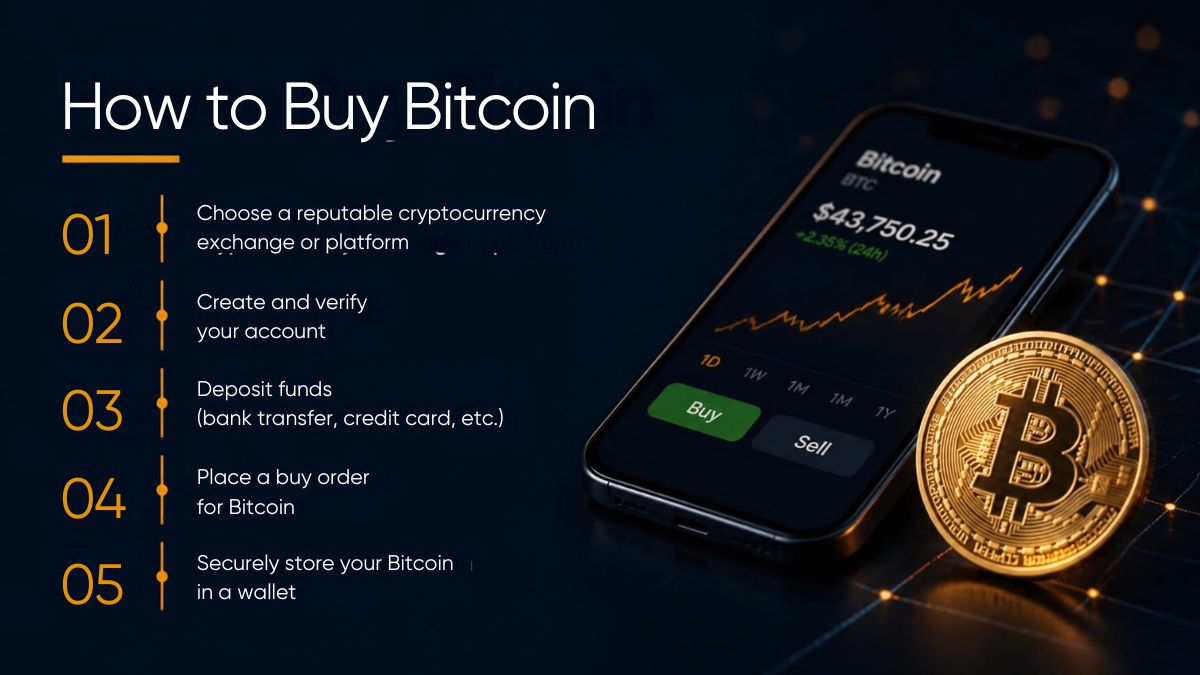
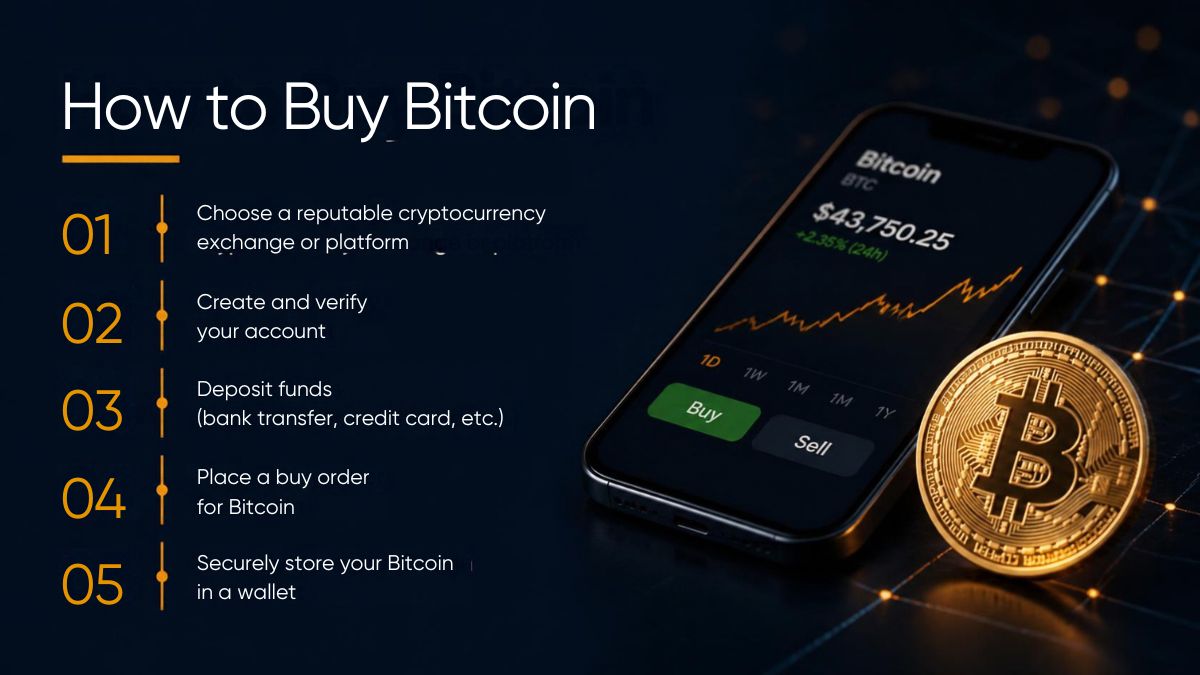
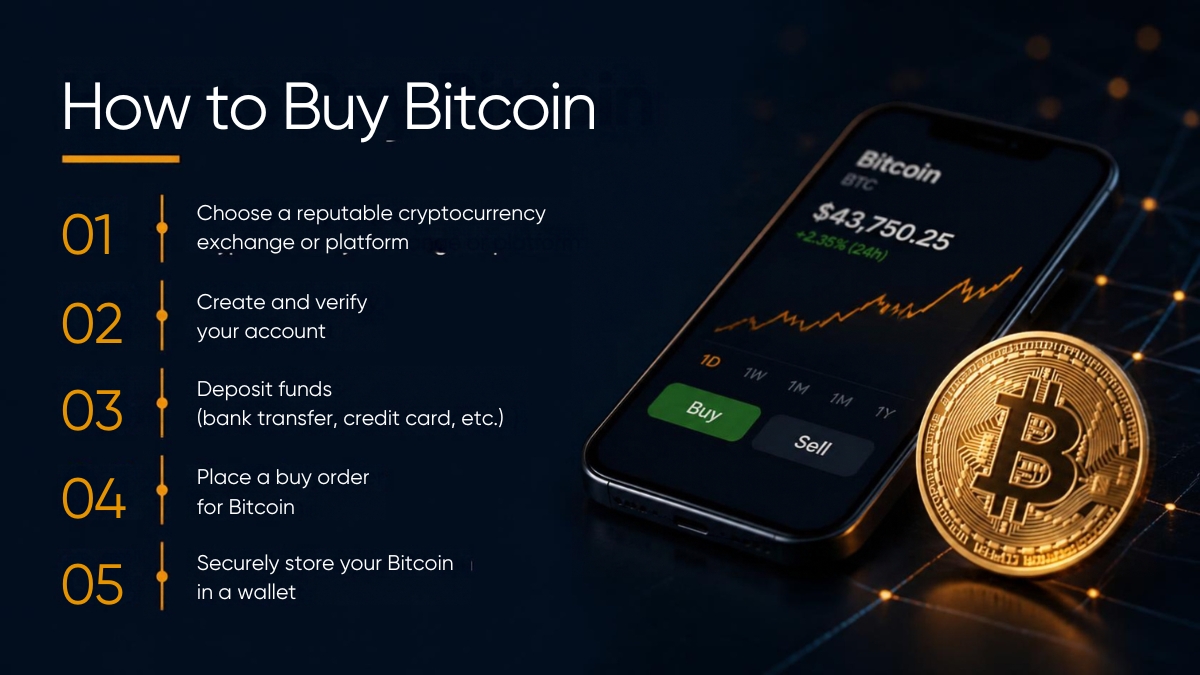
Register through the provider's official website or app. Use a strong, unique password, complete any required identity checks, and enable two-factor authentication if available. Then compare supported funding methods. A bank transfer may cost less than a debit card, but processing times and fees depend on the provider and your location. Check both before adding funds.
Choose an order and review it before confirming
A market order aims to buy promptly at the available price, which can change while the order processes. A limit order sets a price condition, but it may never fill. Before confirming, check the Bitcoin amount, total payment, quoted exchange rate, and fees. Afterward, look for the completed transaction in your account history. If the order is still open, it hasn't finished buying.
Understand Bitcoin fees and common buying risks
The displayed Bitcoin price doesn't tell you the full cost. Providers may charge for trading or payment processing, and moving Bitcoin to your own wallet may involve a withdrawal charge or network fee.
Check spreads, payment fees, and withdrawal costs
The spread is the difference between a provider's buy and sell prices. A wide spread can increase your cost even when the advertised trading fee looks low. Compare the final amount of Bitcoin you'd receive for the same payment across providers. If you intend to withdraw it, check that cost too; fees and order options vary.
A low advertised fee doesn't guarantee the cheapest purchase if the quoted price includes a wider spread.
Watch for scams and avoid rushed decisions
Be wary of guaranteed-profit offers, fake support accounts, and anyone pressuring you to act immediately. Visit a provider's site directly rather than following an unexpected message. Never share your password or wallet recovery phrase; a legitimate support agent doesn't need either one. Bitcoin transactions are generally difficult to reverse, so check the recipient and details before sending funds.
Choose a Bitcoin wallet and protect your access
You can leave Bitcoin with your provider or move it to a self-custody wallet. The first option reduces what you must manage yourself. The second gives you control of the keys, along with responsibility for recovering them.
Compare hardware, software, and web wallets
Hardware wallets are devices designed to keep private keys offline. Software wallets run on a phone or computer, while web and exchange wallets are accessed through online accounts. None eliminates the risk of theft, damage, or lost access. Choose based on how much you hold, how often you'll use it, and whether you're prepared to manage a backup. If you withdraw Bitcoin, confirm that your receiving wallet supports it.
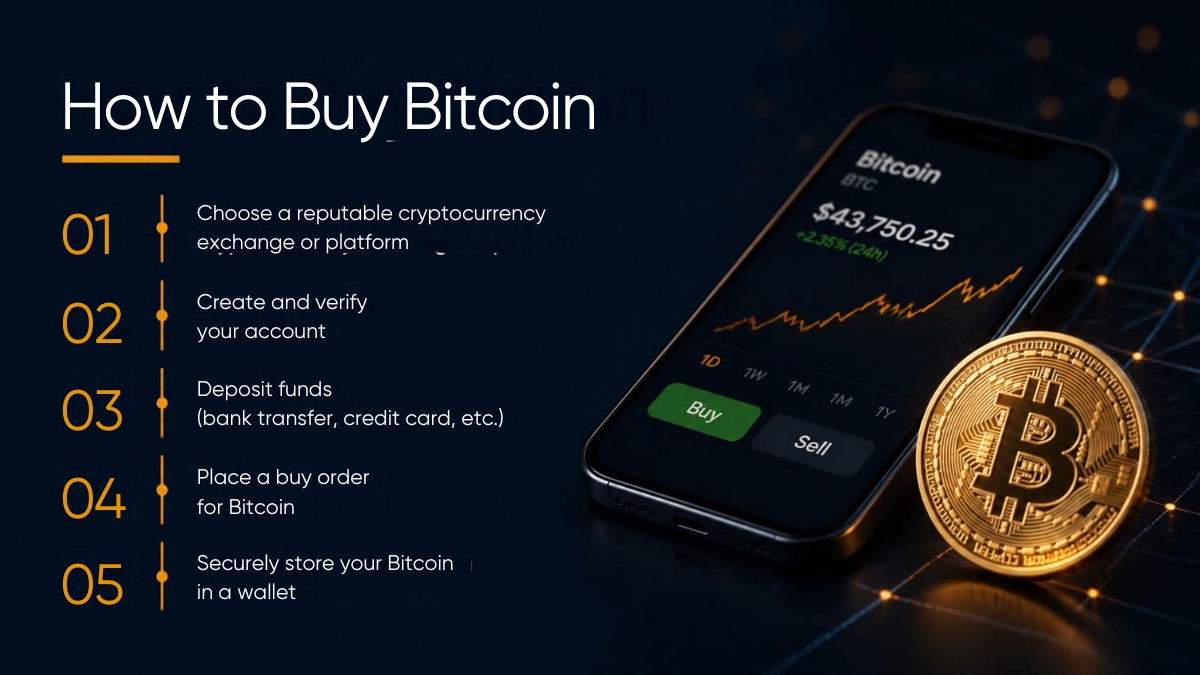
Back up your recovery phrase and secure your account
A self-custody wallet may provide a recovery phrase during setup. Store it offline in a private, secure place, and never photograph or share it. Losing it can mean losing access to your Bitcoin if your device fails. Keep wallet software updated, use two-factor authentication where available, and check the receiving address carefully before every transfer. For a first withdrawal, a small test transfer can help you catch an address mistake.
A safer way to start
Start with a budget you can afford to lose. Compare buying methods and total costs, review your order, and protect whichever account or wallet holds your Bitcoin.
There's no need to rush your first purchase. Learn at your own pace; this guide is educational, not personalized financial advice.