




A Trusted Forex Broker
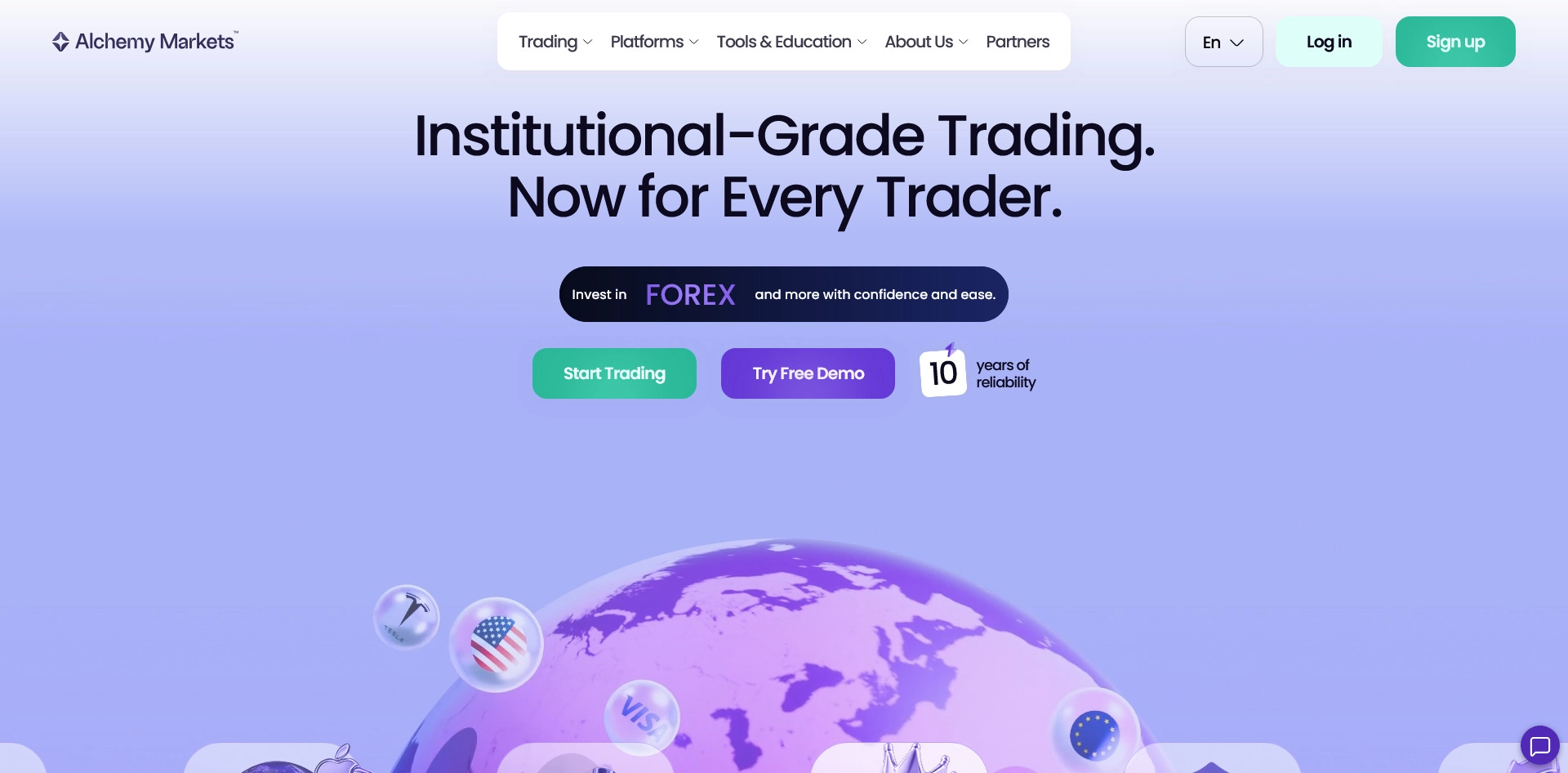
Alchemy Markets Forex Broker Review Real Spreads, Hidden Fees, and Honest Verdict
Choosing a forex broker means looking past the marketing claims and digging into real costs.
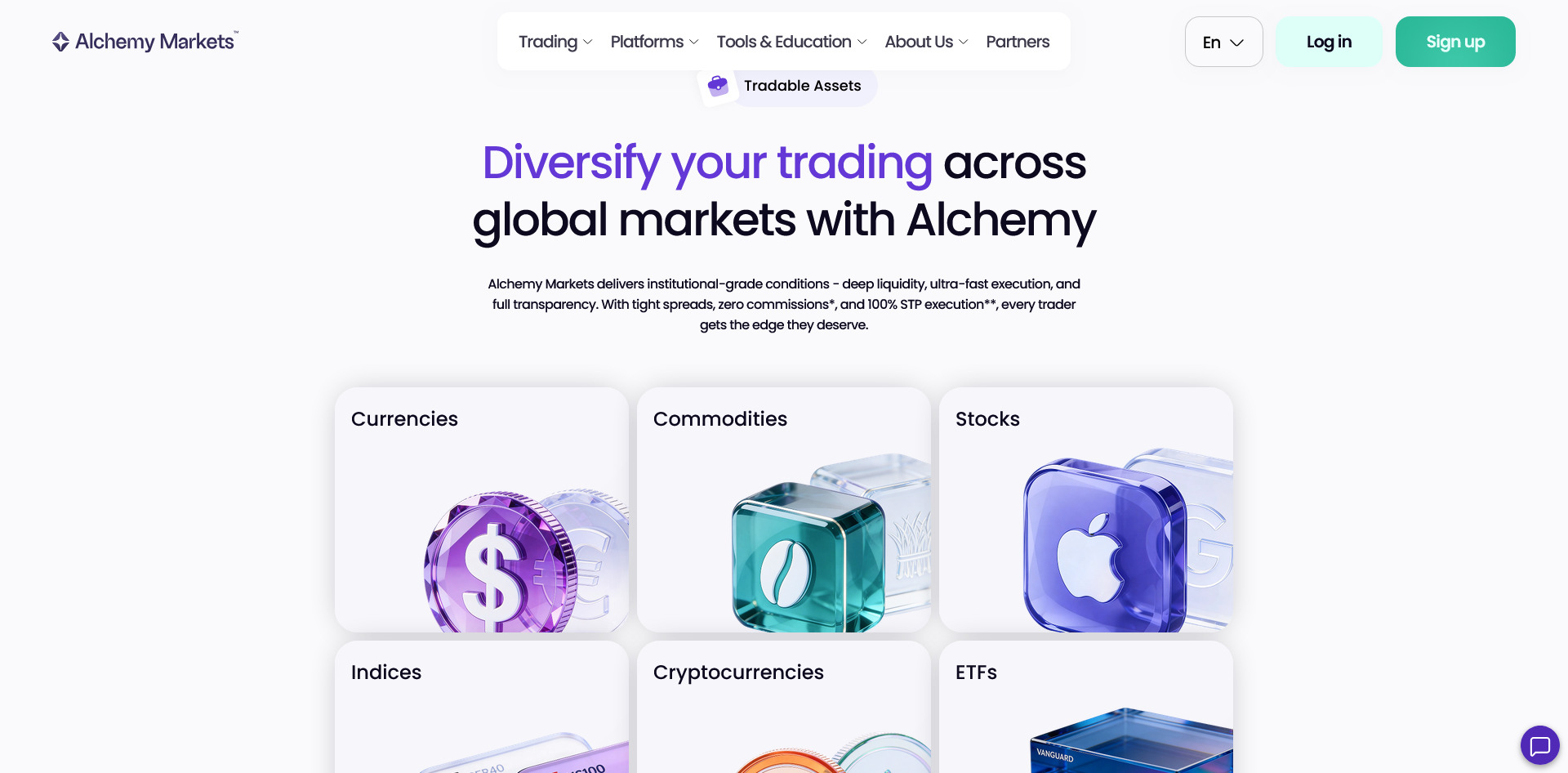
We tested Alchemy Markets, a multi-asset CFD broker that offers access to over 300 instruments. These include forex, indices, stocks, commodities, cryptocurrencies, and ETFs. The broker was founded in 2016 and requires a $1,000 minimum deposit. Alchemy Markets claims competitive spreads and solid research tools.
We ran live spread tests and calculated hidden fees. We also reviewed their platforms to give you an honest verdict on whether this broker delivers on its promises.
What Is Alchemy Markets and Who Is It For?
Alchemy Markets positions itself as a multi-asset CFD broker, but the company's structure reveals a more complex operation spread across multiple jurisdictions. Understanding who regulates them and how their entities function helps clarify whether this broker fits your trading style.
Company Background and Regulation
Alchemy Markets operates as a privately held brokerage with 51-200 employees. The company has its headquarters in St Julian's, Malta. Founded in 2017, it has built its service around institutional-grade trading infrastructure.
Three distinct authorities provide regulation. Alchemy Markets Ltd holds a Malta Financial Services Authority (MFSA) license under registration number C/56519 and operates as a Category 3 licensed entity. This authorization allows them to deal on their account, receive and transmit orders for retail and professional clients, and hold client funds. The MFSA operates under MiFID II regulations and places itself among top-tier regulatory bodies.
Alchemy International Ltd carries a separate license from the Seychelles Financial Services Authority, number SD136. Alchemy Prime Limited operates under UK Financial Conduct Authority oversight with reference number 612233. Client funds sit in segregated accounts, and negative balance protection applies across entities.
The broker offers platform services in English, French, German, Italian, and Arabic. Transparency varies across their operations. They provide fair disclosure on regulation and fees but limited detail on certain service aspects.
How Spreads Compare to Industry Measures
Testing on the Classic account showed trading costs range from average to high mostly. The notable exception remains indices, which outperform competitor offerings. Alchemy Markets matches top-tier brokers like Pepperstone in spread competitiveness and supports raw spread trading that goes as low as 0.0 pips.
The broker delivers institutional-grade conditions through deep liquidity and fast execution with 100% STP execution. But the "tight spreads" claim requires context. Forex majors and indices deliver competitive costs. Other asset classes introduce commissions that lift total transaction expenses beyond what headline spread numbers suggest.
Hidden Fees Breakdown: What They Don't Tell You Upfront
Beyond the spread numbers we tested, Alchemy Markets applies multiple fee layers that affect your trading costs by a lot. These charges vary by instrument type, account tier, and holding duration. You need to calculate your true all-in expenses before committing capital.
Commission Rates on Stocks, Crypto, and Futures
Classic and Premier accounts trade forex, metals, and indices commission-free. VIP accounts operate differently and charge raw spreads as low as 0.0 pips with commissions starting from $4.00 per lot round-turn.
Stock CFDs carry commissions as low as 0.25% round turn. Trading 100 shares of Apple at $255.00 means paying a 9-cent spread ($9.00 total) plus 0.0035 of the trade's total value. The position value of $25,500 adds $89.25 in commission and brings your round-trip cost to $98.25. This commission structure makes stock CFD trading expensive compared to direct equity access.
Premier accounts incur a 0.30% round turn commission on crypto CFDs. The broker promotes zero commissions on crypto marketing materials, but this applies only to the spread component. Actual crypto trading involves both competitive spreads and these percentage-based commissions that traders must factor into position sizing.
Swap Fees for Overnight Positions
Positions held past market close trigger swap charges. These overnight financing costs fluctuate based on the instrument, position direction (long or short), and common interest rate differentials. Alchemy Markets applies these fees to compensate for the leverage extended on open positions, with rates varying by market conditions.
Inactivity Fee: $30 After 3 Months
Dormant accounts face a $30 monthly charge after three consecutive months without activity. This exceeds industry norms where inactivity fees appear after 12 months. The policy creates pressure on occasional traders who maintain funded accounts but trade sporadically.
Withdrawal Fees: Bank Transfer vs E-Wallets
Alchemy Markets states it charges no withdrawal fees. Payment providers and banks apply their own charges and shift costs outside the broker's direct control
The 2.9% fee on Skrill and Neteller withdrawals gets pricey on larger amounts. A $10,000 withdrawal through these e-wallets costs $290, while cards or digital wallets process the same amount without broker-side fees.
Account Tier Pricing Differences
Stock CFDs and crypto CFDs use separate commission schedules that improve at higher account tiers. Classic accounts starting at $100,000 offer commission-free forex and metals trading. Premier accounts begin at $500,000 with tighter spreads and lower commissions. VIP accounts require $50,000 minimum deposits and provide the lowest trading fees across all instruments.
The tier-based model reduces costs as deposit size increases, but fee details show inconsistencies in different broker page versions. We recommend confirming final fee schedules inside the client area before funding your account.
Real Spreads Testing: Live Market Results
We conducted live spread testing to measure actual trading costs beyond what Alchemy Markets advertises on their website. Our analysis focused on the most liquid trading sessions when spreads tighten typically, giving the broker every advantage to showcase competitive pricing.
EUR/USD Spread Analysis During London and New York Sessions
We tested spreads during the London open and right after the New York open on March 24, 2026. These sessions represent peak liquidity periods when institutional traders participate in the market actively. The spread is the difference between bid and ask price, which represents the cost to open and close a trade immediately.
Major pairs such as EUR/USD, GBP/USD and USD/JPY carry the tightest spreads at Alchemy Markets typically. Spreads can drop as low as 0.0 pips on certain instruments. Minimum spreads start at 0.2 pips. The broker's multi-provider liquidity helps maintain spread stability during volatile periods and reduces the risk of sudden widening that catches traders off guard.
Narrower spreads mean trades reach profitability faster because the market requires less movement before a position turns positive. We observed tight pricing that matched the broker's claims during calm trading sessions, while volatile periods showed reasonable stability compared to single-provider brokers.
Index Spreads: DAX 40 and Dow Jones 30
Our testing revealed that pricing performs most competitively in indices, with both the DAX 40 and Dow 30 beating industry averages. This stands out as the strongest area of Alchemy Markets' spread offering. Index traders benefit from tighter execution costs. Scalping and day trading strategies become more viable on these instruments.
Commodities and Crypto Spread Performance
Commodity spreads came in closer to the measure rather than below it by a lot. The broker offers 10+ commodity CFDs covering metals and energies with institutional spreads and commissions as low as $0.00. Commodities maintain reasonable spreads for active traders, though not exceptional.
Crypto and shares present a different picture. Spreads on these instruments appear very tight at first, but additional commissions bring the total cost much higher. This commission structure affects the final trading cost by a lot, especially for frequent traders cycling through multiple positions.

Trading Platforms and Account Types
Platform selection defines your trading experience. Alchemy Markets provides access to industry-standard tools among other specialized solutions for algorithmic traders.
MT4, MT5, and TradingView Access
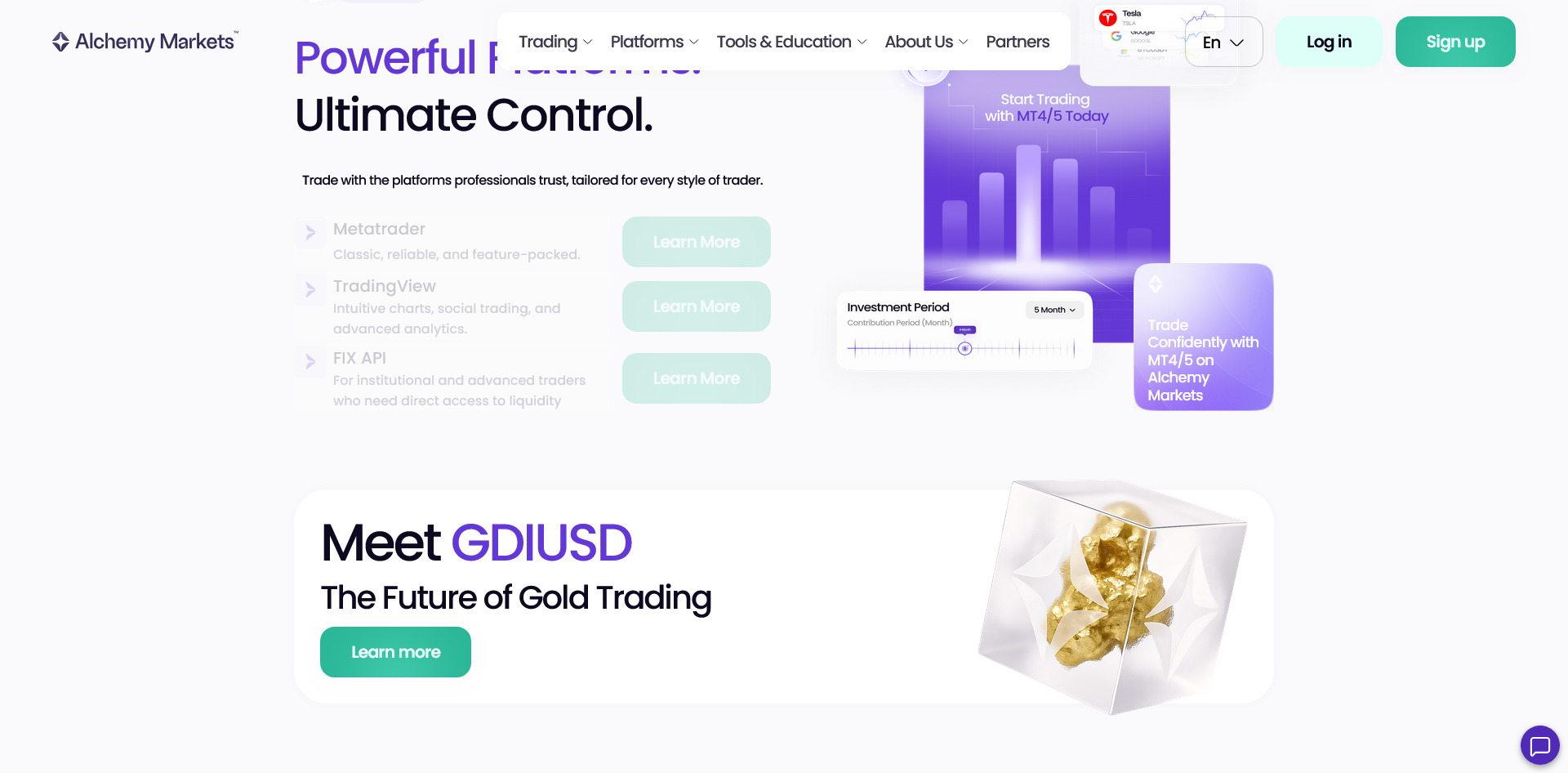
We tested all three primary platforms offered by Alchemy Markets. MetaTrader 5 is the main trading interface and features over 80 technical indicators, 21 timeframes, and support for up to 100 chart windows at once. The platform processes trades across 1,000+ products spanning 10 asset classes. This has 125 forex pairs and over 60 cryptocurrency CFD pairs.
TradingView integration launched not long ago and allows traders to execute orders from charts without switching platforms. This setup has access to more than 100 built-in indicators, custom Pine Script coding, and multi-device optimization. The broker expects Gold Broker status on TradingView's directory across ten major European countries by August 2025.
MT4 remains available but focuses on forex trading with simplified functionality. Copy trading operates through MT4/5 environments with 50ms average replication speed to unlimited follower accounts.
Classic Account: $1,000 Minimum Deposit
The Classic account requires a $1,000 starting deposit and grants access to MT5 and FIX API. We found this tier offers commission-free trading on forex and indices, while stocks and crypto carry separate commission schedules. Platform access stays consistent across tiers, but pricing improves as deposit levels increase.
Premier and VIP Account Requirements
Premier accounts begin at $5,000 and deliver tighter spreads than Classic pricing. The structure upgrades accounts based on deposit size and moves traders between Classic, Premier, and VIP tiers.
VIP accounts start at $50,000 and introduce raw spreads from 0.0 pips with $4.00 round-turn commissions per lot. This tier provides the tightest pricing on instruments of all types and has complimentary VPS hosting.
FIX API and VPS Hosting Availability
FIX API access requires a funded account with $25,000 minimum. This protocol makes custom platform connections possible, faster execution speeds, and reduced trading friction to support algorithmic strategies.
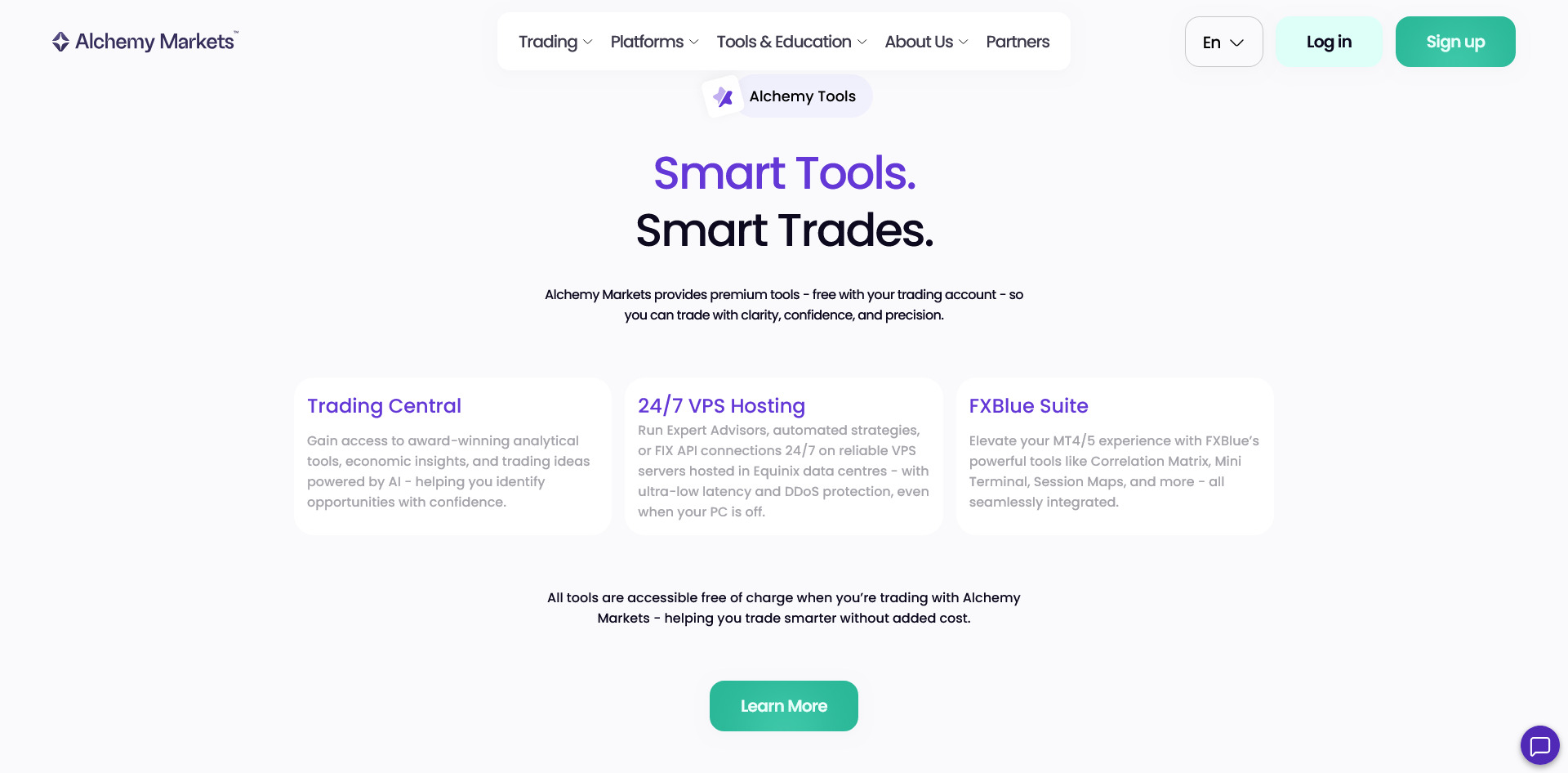
VPS hosting comes in two packages. Gold VPS runs up to 3 MetaTrader instances at once, while Platinum VPS supports up to 5 instances. Both options connect to Equinix data centers in New York or London. This makes 24/7 automated trading possible even when home systems shut down. VIP account holders receive free VPS access, while Classic and Premier traders qualify based on trading volume.
Deposit Methods, Withdrawals, and Customer Support
Your ability to fund your account and access support determines whether you can execute strategies without operational friction. We tested multiple deposit and withdrawal routes to measure actual processing speeds against the timelines Alchemy Markets stated.
Instant Deposits: Cards, Apple Pay, Google Pay
Credit and debit cards process deposits instantly through Visa, MasterCard, Maestro, and Visa Electron. Apple Pay and Google Pay deliver the same immediate funding without fees. We found these methods are the best combination for traders who need capital available during market opportunities.
Bank transfers clear in 2-3 business days with no fees from Alchemy Markets. Crypto-to-fiat conversions take up to 10 minutes and carry no broker charges[274]. The minimum deposit sits at $100 across most payment methods, though account tiers require higher starting balances.
Withdrawal Processing Times: 24 Hours to 14 Days
Alchemy Markets processes withdrawal requests within one business day. Actual receipt depends on your payment method after approval. Cards take 1-7 working days[274], while bank transfers extend to 1-14 working days[274]. E-wallets arrive the same day once approved.
All withdrawals follow a return-to-source policy. Funds must go back to the same payment method used for deposits and prevent third-party transfers. Minimum withdrawal amount stands at $50.
Live Chat, Phone, and Email Support Testing
We tested support channels during active trading hours. Live chat and email delivered prompt responses with satisfactory answers. Phone support proved inconsistent, as we could not reach an agent during our attempts.
The broker operates 24/5 assistance[273] and closes on weekends. Support extends through WhatsApp and Telegram for traders preferring messaging apps. Multilingual teams handle inquiries, with most queries addressed within 24 hours.
Skrill and Neteller: 2.9% Fee Warning
Both e-wallets charge 2.9% on deposits and withdrawals[273][274]. To cite an instance, moving $5,000 through Skrill costs $145 each way and totals $290 for a complete funding cycle. This makes them by a lot less affordable than cards or digital wallets despite instant processing.
Conclusion: Honest Verdict on Alchemy Markets
Alchemy Markets delivers what it promises to experienced traders focused on indices, especially with the DAX 40 and Dow 30 where spreads beat competitors. The MT5 platform works well, and TradingView integration adds value to technical analysts.
The fee structure gets complicated fast though. Stock and crypto commissions inflate costs beyond headline spreads while the $30 inactivity fee kicks in after just three months. E-wallet charges hit 2.9%. The broker targets active traders with capital to spare, given the $1,000 minimum deposit.
Alchemy Markets suits index traders and algorithmic specialists. Casual traders and beginners will find better value elsewhere.
Key Takeaways
After comprehensive testing of Alchemy Markets' real trading conditions, fees, and platforms, here are the essential insights every trader should know:
• Index trading is their strongest suit - DAX 40 and Dow 30 spreads genuinely beat industry benchmarks, making this broker ideal for index scalpers and day traders.
• Hidden fees add up quickly - Stock CFDs carry 0.25% commissions, crypto has 0.30% fees, and e-wallet withdrawals cost 2.9%, significantly inflating total trading costs.
• $30 inactivity fee after just 3 months - This aggressive policy pressures occasional traders, as most brokers wait 12 months before charging dormant account fees.
• High barriers favor experienced traders - $1,000 minimum deposit, complex fee structures, and institutional-grade tools target active professionals rather than beginners.
• Multi-entity regulation provides solid protection - Malta MFSA, UK FCA, and Seychelles FSA oversight with segregated client funds offers legitimate regulatory coverage across jurisdictions.
The verdict: Alchemy Markets excels for index traders and algorithmic specialists who can navigate the fee complexity, but casual traders will find better value with simpler, lower-cost alternatives.
FAQs
Q1. What is the minimum deposit required to open an account with Alchemy Markets? The minimum deposit to start trading with Alchemy Markets is $1,000 for a Classic account. Higher account tiers require larger deposits: Premier accounts start at $5,000, while VIP accounts require a minimum of $50,000. The broker also offers a $100 minimum deposit option across most payment methods, though account tier requirements still apply.
Q2. Which regulatory authorities oversee Alchemy Markets? Alchemy Markets operates under three regulatory authorities across different jurisdictions. The Malta entity holds a license from the Malta Financial Services Authority (MFSA) under MiFID II regulations, the UK entity is regulated by the Financial Conduct Authority (FCA), and the international entity operates under Seychelles Financial Services Authority oversight. All entities maintain segregated client funds and offer negative balance protection.
Q3. Are there any inactivity fees charged on dormant accounts? Yes, Alchemy Markets charges a $30 monthly inactivity fee after just three months of no trading activity. This is more aggressive than industry standards, where most brokers typically wait 12 months before applying inactivity charges. This policy particularly impacts occasional traders who maintain funded accounts but don't trade regularly.
Q4. What are the withdrawal fees and processing times? Alchemy Markets doesn't charge direct withdrawal fees, but payment providers apply their own charges. Bank transfers cost approximately $35/£5/€5 and take 1-14 business days. Credit and debit cards process in 1-7 days with no fees. Skrill and Neteller charge 2.9% but process same-day once approved. Apple Pay and Google Pay withdrawals take up to 1 business day with no fees.
Q5. Which trading platforms are available at Alchemy Markets? Alchemy Markets offers MetaTrader 4, MetaTrader 5, and TradingView integration. MT5 serves as the main platform with over 80 technical indicators and access to 1,000+ products across 10 asset classes. TradingView allows direct chart execution with 100+ built-in indicators. Advanced traders can also access FIX API (requiring $25,000 minimum) and complimentary VPS hosting for VIP account holders.