
Kato Prime Review: Regulation, Fees and Accounts

Kato Prime
Hong Kong
Your money is at risk
Kato Prime overview: what kind of broker is it?
Kato Prime is an STP, ECN forex and CFD broker based in Hong Kong, founded in 2020. Regulation: Company incorporated in Hong Kong under CR No. 2509294.
Traders get MT4 for Desktop and MT4 Web Terminal, spreads from From 0.0 pips, leverage up to 1:3000 and a $15 minimum deposit. New clients can also check the current $333 No Deposit Bonus.
Tradable markets include Stocks, Indices, Energies, CFDs, Cryptocurrency, Precious Metals, Forex.
Kato Prime broker specifications
Company and regulation
| Broker | Kato Prime |
|---|---|
| Regulated by | Company incorporated in Hong Kong under CR No. 2509294. |
| Type of broker | STP, ECN |
| Country | Hong Kong |
| Foundation year | 2020 |
| Website | Visit Kato Prime website |
| Website languages | English, Indonesian, Arabic, Simplified Chinese, Spanish, Malay, Vietnamese, Thai, Persian |
Trading conditions
| Minimum deposit | $15 |
|---|---|
| Maximum leverage | 1:3000 |
| Minimum spreads | From 0.0 pips |
| Base currencies | EUR, USD, GBP, SEK, DKK, ZAR, NOK, PLN, AUD, AED, CZK and More |
| Tradable instruments | Stocks, Indices, Energies, CFDs, Cryptocurrency, Precious Metals, Forex |
| Hedging / scalping | Allowed |
| News trading | Allowed |
| Web trading | Yes |
| Mobile trading | Yes |
Bonus and promotions
| Current promotion | $333 No Deposit Bonus |
|---|---|
| Welcome bonus | 100% Forex Deposit Bonus |
| Standard no deposit bonus | $333 No Deposit Bonus |
Contact details
| Telephone | +85 223618699 |
|---|---|
| Email / Skype | support@katoprimes.com |
| Fax | +85 223618699 |
| Head office | Flat 7 15/F Ho King Commercial Centre 2-16 FA Yuen Street Mong Kok Kowloon Hong Kong |
| Contact form | Contact Kato Prime |
Kato Prime pros and cons
Pros
- Regulated: Company incorporated in Hong Kong under CR No. 2509294.
- $333 No Deposit Bonus
- Low $15 minimum deposit
- Spreads from From 0.0 pips, STP, ECN execution
- MT4 for Desktop and MT4 Web Terminal and more platforms
- Islamic, mini, VIP and managed accounts
- 10 deposit and withdrawal methods
Cons
- Bonus comes with trading-volume rules
- Leverage up to 1:3000 is very high risk
Kato Prime account types
Kato Prime offers several account options so beginners and experienced traders can both find a fit. Live accounts start from a $15 deposit.
| Free demo account | Yes – practise with virtual money |
|---|---|
| Mini account | Yes – smaller trade sizes for beginners |
| VIP account | Yes – for high-volume traders |
| Islamic (swap-free) | Yes – no overnight swap charges |
| Swap-free account | Yes |
| Managed account | Yes |
| Segregated client funds | Yes |
Kato Prime trading platforms
Kato Prime runs on MT4 for Desktop and MT4 Web Terminal, which give you advanced charts, more timeframes, an economic calendar and support for expert advisors. Web trading and mobile trading are both available.
Kato Prime deposit and withdrawal methods
The same methods work for both funding and withdrawals, which makes cash-outs simpler because you can usually withdraw the way you deposited.
Banks and cards
E-wallets
Crypto
Local and internal
Is Kato Prime safe and legit?
Kato Prime is a regulated broker. Company incorporated in Hong Kong under CR No. 2509294. The broker says client money is kept in segregated accounts, separate from company funds.
Always check the licence number on the regulator's own website. Offshore regulators do not offer the investor compensation schemes or leverage caps of top-tier regulators such as the FCA or CySEC, which is why leverage here can reach 1:3000.
Our verdict on safety
Kato Prime suits traders who understand the risks of leveraged CFD trading. Start small, test a withdrawal early and use sensible leverage.
Risk warning: CFDs are complex instruments and carry a high risk of losing money quickly because of leverage. Only trade if you understand how CFDs work and can afford to lose your money.
Full Kato Prime review
Kato Prime Forex Broker Review Costs, Platforms, Safety
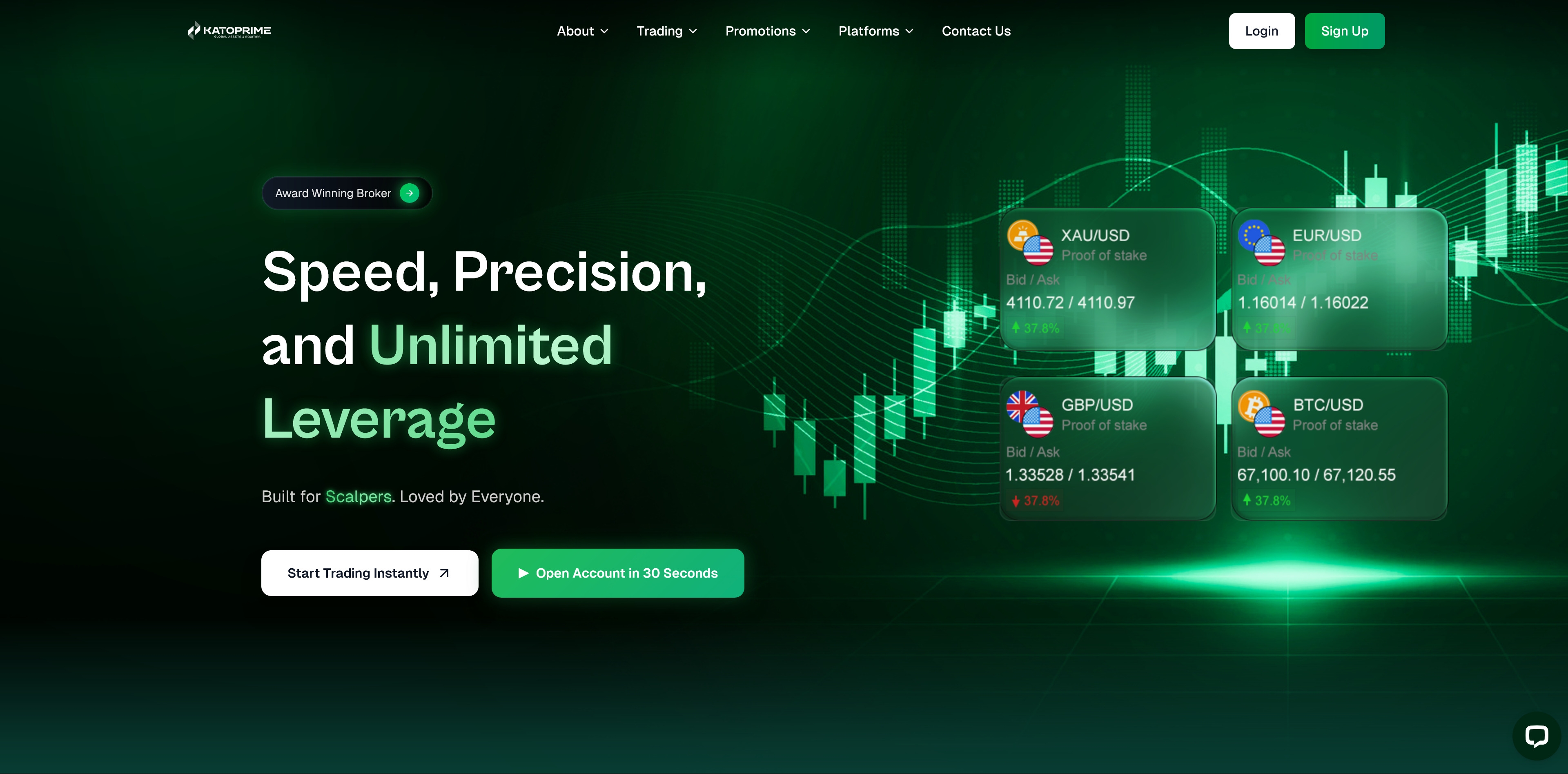
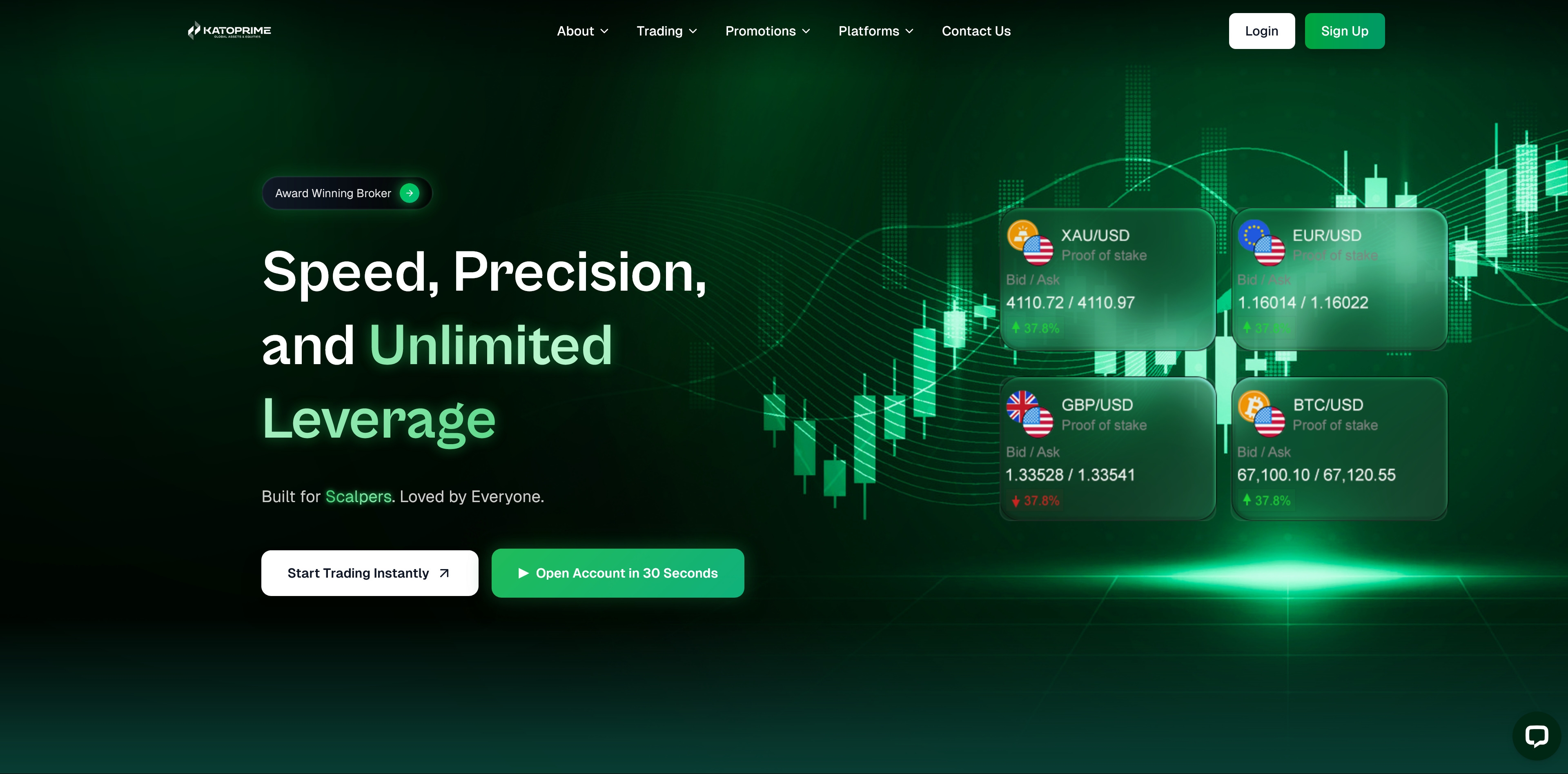
Kato Prime says it gives traders a lot to like, including low minimum deposits, high leverage, MT4 and MT5 access, swap-free trading, and quick withdrawals. That kind of offer can be appealing, especially if you want to start small or keep costs down.
The real question is whether Kato Prime delivers on those claims and whether it's safe for real-money trading. This review looks at trading costs, account types, platforms, regulation, funding, support, and user feedback, so you can judge the broker on more than its marketing.
What Kato Prime says it offers and who it seems built for
Kato Prime's pitch is straightforward. It markets itself to forex and CFD traders who want low entry costs, tight pricing, fast execution, and very high leverage. On top of that, it says it supports a mix of markets, including forex, stocks, ETFs, and crypto, although the public website gives only limited detail on the exact instruments available.
The broker also says it is incorporated in Hong Kong and lists Hong Kong-based company details. At the same time, it restricts clients from some countries, including the United States and other excluded jurisdictions, so access is not universal. That mix of broad trading claims and narrow regional access gives you the first clue about its target audience.
The main selling points on the homepage
The homepage is built around a few headline claims that are meant to grab attention fast. The message is clear, keep costs low, move quickly, and trade with flexible account options.
A few of the biggest promises stand out:
- Spreads from 0 pips, which is a big draw for traders who focus on transaction costs
- Leverage up to 1:5000, which appeals to traders who want larger exposure with a small balance
- Instant deposits and withdrawals, which adds to the idea of quick account access and fast cash flow
- Multiple account types, including low-cost and raw-spread style options
- MT4 and MT5 support, which matters to traders who already know those platforms
- Swap-free trading, which may appeal to traders who want to avoid overnight financing costs
These claims matter because they speak directly to the biggest pain points in retail trading: cost, speed, and flexibility. A small account holder may see the low minimum deposit as a simple way to get started. A more active trader may focus on the idea of tight spreads and quick execution, since both can affect short-term trading results.
The appeal is obvious, but the real test is whether the trading conditions stay the same once an account is live.
The account structure also supports that sales pitch. Kato Prime offers entry-level and more advanced tiers, which makes the broker look like it wants both casual traders and higher-volume users. That is a familiar setup in forex, but the value depends on how closely the real trading conditions match the advertised ones.
The types of traders Kato Prime seems to target
Kato Prime looks built for traders who care about cost and speed first. That includes scalpers, day traders, and anyone trying to keep spreads as tight as possible. If a broker really offers raw pricing and quick order handling, those traders are the first group that notices the difference.
Scalpers are likely to be drawn in by the low spread claims and fast execution language. Small changes in spread can matter a lot when you open and close positions often. Day traders may also find the platform mix and pricing model attractive, especially if they want to trade actively without paying wide spreads on every position.
Swing traders are a slightly different fit. They care less about tiny spread changes and more about holding costs, execution quality, and account flexibility. For them, swap-free trading can be useful, while the high leverage can still make the account risky if positions move against them.
Kato Prime also seems aimed at small-capital traders and newer users. The low starting deposit, plus the presence of a demo account, lowers the barrier to entry. That gives beginners a way to test the setup before putting real money on the line.
The broker's raw pricing style and high leverage, however, will likely interest more experienced traders. These users usually know how to manage margin, position size, and risk. They are also the ones most likely to compare the broker's actual execution and withdrawal performance against its marketing claims.
In simple terms, Kato Prime looks designed for traders who want a low-cost start, access to familiar platforms, and room to trade aggressively. That makes it appealing on paper, but the limited public detail on instruments, terms, and country access means you still need to check the fine print before treating the pitch as the full story.
Account types, deposits, and trading costs explained simply
Kato Prime keeps its account menu focused on a few main tiers, but the public naming is a little uneven. Some pages list Standard, Pro, and Pro Zero, while others use Advanced, Raw Premium, and Raw Platinum. The practical idea is the same, though, entry-level accounts start cheap, while the higher tiers ask for much more money in exchange for tighter pricing.
That split matters because the right account depends on how you trade. If you want a small first deposit and simple pricing, one setup makes sense. If you trade often and care about every fraction of a pip, a raw-spread account may fit better.
How the Standard, Pro, and Pro Zero style accounts compare
The simplest way to read Kato Prime's live accounts is to separate them into low-cost, no-commission accounts and raw-spread, commission-based accounts. The Standard or Advanced type sits at the entry level, while Pro, Pro Zero, Raw Premium, and Raw Platinum are aimed at traders who want tighter pricing and are willing to pay for it.
Here is a quick side-by-side view of the main patterns in the public account info:
| Account style | Minimum deposit | Pricing style | Best for |
|---|---|---|---|
| Standard / Advanced | $15 | Low spreads, no commission | Newer traders, small balances |
| Pro / Raw Premium | $50 | Lower spreads, commission per lot | Active traders, tighter cost control |
| Pro Zero | $50 | Very tight or zero spreads, commission per lot | Scalpers and frequent traders |
| Raw Platinum | $3,000 | Lowest spreads, lower commission style | Higher-volume or more experienced traders |
The entry-level account is the easiest way in. A $15 starting deposit keeps the barrier low, so you can test the broker without putting much capital at risk. That suits beginners, demo users moving to live trading, and anyone who wants to check execution before scaling up.
The mid-tier Pro or Raw Premium account is a step up in both cost and trading style. You pay a commission, but the spread is usually tighter. That can work well if you trade more often, because a smaller spread can matter more than a flat no-commission setup.
The Pro Zero style account is built for traders who want the tightest pricing possible. The trade-off is clear, you may see a spread near zero, but you also pay commission on each lot. For active traders, that can still be cheaper than a wider spread account. For low-frequency traders, the commission may cancel out the benefit.
The Raw Platinum tier sits at the top end. Its high minimum deposit puts it out of reach for casual users, but it is clearly meant for traders who want a more premium setup and are comfortable committing more capital.
What to know about spreads, commissions, and swap-free trading
Kato Prime puts a lot of weight on low spreads, and that matters. Tight spreads can help traders who open and close positions often, since the cost of entry and exit stays lower. That is especially useful for scalping and short-term trading.
Still, the real cost is not just the spread. You also need to factor in:
- Commission, which applies on raw-spread accounts like Pro Zero or Raw Premium
- Swap or rollover charges, which can affect trades held overnight
- Other fees, which may not always be obvious at first glance
Swap-free trading is another headline feature. For traders who need interest-free overnight positions, that can be a useful option. The key is to check the terms closely, because swap-free accounts sometimes come with admin charges, holding limits, or special conditions.
A tight spread looks cheap on paper, but the full cost only appears after you check commission, swap, and account terms.
That is why traders should compare accounts by trade style, not by one headline number. If you hold positions for a long time, swap-free rules matter more. If you trade in and out all day, spread and commission matter more.
Deposits, withdrawals, and the questions traders should ask first
Kato Prime says it supports several funding methods, including bank cards, bank transfer, PayVersa, and similar payment rails such as AwePay and FasaPay. The broker also promotes instant processing for deposits and withdrawals, which sounds convenient if you want quick access to your funds.
That said, funding speed is one thing, withdrawal reliability is another. Public user feedback includes complaints about delayed or blocked withdrawals, so it makes sense to stay cautious. A small first deposit is the safest way to test the full process.
Before you fund an account, ask these questions:
- How long do withdrawals take in practice?
- Are there fees for deposits or withdrawals?
- Is identity verification required before the first payout?
- Are there limits tied to bonuses or promotions?
- Does the same payment method need to be used for withdrawal?
A practical first step is simple. Deposit a small amount, place a few trades, then request a withdrawal before committing more capital. If the broker handles that cleanly, you get a better sense of how the account really works.
For traders, that test is just as important as the spread sheet. Fast deposits are nice, but the real check is whether your money comes back without surprises.
MT4, MT5, and the platform setup behind the broker
Kato Prime leans on two names most traders already know, MetaTrader 4 and MetaTrader 5. That matters because platform comfort can lower the barrier to entry. If you already know where the charts, order ticket, and indicators live, opening an account feels less like learning a new system and more like testing a broker's conditions.
Why MT4 and MT5 matter for most traders
MT4 and MT5 are popular for a reason. They give traders the core tools needed to read price action, place trades quickly, and manage positions without a lot of clutter.
Both platforms offer charting tools, a wide range of technical indicators, and one-click trading. That makes them a strong fit for active traders who want to react fast when price moves. MT4 is also well known for Expert Advisors, so traders who use automated strategies can run them through a platform they already trust.
MT5 adds a bit more flexibility. Many traders prefer it for its broader feature set and improved order handling, especially if they trade more than just forex. In practice, that gives you two familiar paths, one classic and one more advanced.
A simple way to look at them is this:
| Platform | Main strengths | Best fit |
|---|---|---|
| MT4 | Simple layout, strong chart tools, EAs, fast trade entry | Forex traders, scalpers, algorithm users |
| MT5 | More functions, expanded order tools, broader market use | Multi-asset traders, active traders |
That familiarity is a real plus for Kato Prime. You don't have to learn a proprietary system before you can place a trade. You can bring your own templates, indicators, and trading habits with you.
Where the platform setup may fall short
The weakness is in the way Kato Prime presents its setup. Public information suggests the broker relies heavily on desktop access, while mobile support is not well explained. Some platform pages appear to offer downloads for desktop versions only, which can be a problem if you trade while traveling or check positions during the day.
That gap matters because many traders now expect full access on the go. If you manage open trades from a phone, limited mobile tools can slow you down when markets move fast. A platform that works well on desktop but feels thin on mobile can be fine for home use, but it is less useful for active day-to-day monitoring.
Kato Prime also does not appear to offer a strong proprietary trading platform that sets it apart. MT4 and MT5 are dependable, but they are also standard tools across the industry. Without a broker-built platform, there is less to distinguish the user experience.
That can matter in a few ways:
- Less flexibility on the move, if mobile access is limited
- Fewer broker-specific tools, such as custom dashboards or built-in account shortcuts
- Less platform identity, since MT4 and MT5 feel familiar but not unique
For traders who want to watch positions from a phone, desktop-first access can feel restrictive fast.
There are also practical questions around speed and convenience. MT4 and MT5 are strong platforms, but the real experience still depends on how well the broker's setup handles execution, chart updates, and account access during busy market hours. If the broker keeps most of its focus on desktop downloads, traders who need quick checks between meetings or while away from a desk may want to think twice.
For that reason, Kato Prime's platform setup looks solid on paper, but not especially flexible. The MT4 and MT5 foundation is familiar and useful. Still, the lack of clear mobile support and the absence of a standout proprietary platform may leave some traders wanting more.
Regulation, safety, and trust signals that deserve a close look
Kato Prime's safety profile needs a careful read, because the broker's legal setup is a big part of the story. The website points to IFSC registration in Belize, and that matters because regulation affects how complaints are handled, how client money is treated, and how much pressure a broker faces to stay transparent.
What an offshore license means for everyday traders
An offshore license can be a concern if you want strong legal protection. Belize is usually viewed as a lighter-regulated jurisdiction, so the rules are not as strict as they are under the FCA in the UK or ASIC in Australia.
That difference matters in daily trading. Stronger regulators often require clearer reporting, tighter conduct rules, and better safeguards around client money. With a lighter offshore setup, traders often have less protection if something goes wrong, especially when a payout dispute or service complaint appears.
Kato Prime says client funds are held in segregated trust accounts, which is a positive claim on paper. Still, traders should verify what that protection means in practice, who holds the funds, and what happens if the broker runs into trouble.
A license is only part of the safety picture. The details behind it matter just as much.
User reviews and withdrawal complaints that raise red flags
Third-party review sites show mixed, and often negative, feedback. The most common complaints mention withdrawal delays, declined payouts, and frustration with bonus rules that made cashing out harder than expected.
One review does not prove a pattern. Even so, repeated reports across different sites deserve attention, especially when they point to the same pain points. That kind of consistency is what traders should watch for.
The concern is simple, if a broker makes deposits easy but withdrawals messy, the trading experience can turn sour fast. Bonuses can add another layer of friction when they come with trade-volume targets or withdrawal limits.
The trust questions a careful trader should ask
Before funding an account, ask a few direct questions and look for plain answers:
- Where are client funds held, and who controls the trust account?
- What is the exact withdrawal process, and how long does it usually take?
- Are there bonus conditions, trade requirements, or withdrawal caps?
- Does the account carry inactivity fees or hidden admin charges?
- Which legal entity are you signing up with, and under which regulator?
If those answers feel vague, treat that as a warning sign. A broker should be easy to understand before you deposit, not after.
Support, education, and extra features the broker provides
Kato Prime covers the basics here, but the non-trading side of the experience feels thin. That matters because support, learning material, and promotions shape how easy the broker is to use once you have money on the line.
A trader can live with a simple platform. What's harder to accept is slow help, scarce guidance, or unclear bonus rules when a deposit, trade, or withdrawal needs attention.
How easy it is to get help when something goes wrong
Kato Prime lists a few support channels, and that gives clients some direct ways to reach the broker. The problem is that the support setup still looks limited compared with what many traders expect today.
Here's the public support picture in plain terms:
| Support option | Available? | What it means for traders |
|---|---|---|
| Live chat | Yes | Good for quick questions if someone is online |
| Yes | Better for written records and follow-up | |
| Contact form | Yes | Useful, but usually slower than chat |
| Phone support | No | Harder to resolve urgent issues fast |
| Personal account manager | No | Less one-on-one help for larger or newer accounts |
| Service hours | Not clearly stated | You may not know when help is actually available |
That setup is workable for simple questions. It becomes a problem when time matters. If a deposit fails, a trade locks up, or a withdrawal gets delayed, you want a fast human reply, not a waiting game.
Live chat helps if it's active, but it can't replace broader service coverage. Email and contact forms are fine for paper trails, yet they often move more slowly. Without phone support or clear hours, traders are left guessing about response times.
When money is stuck, a limited support menu feels a lot smaller than it did during sign-up.
That gap matters most for newer traders. They usually need help with account access, verification, funding, and platform use. If the only real options are chat, email, and a form, the broker can feel harder to trust when something goes wrong.
Why the education section feels too thin for beginners
Kato Prime does show some market content through a blog feed on the homepage, but the learning area still feels light. The feed is visible, yet it does not seem to lead into a broader education hub with step-by-step guides, platform walkthroughs, or structured beginner lessons.
That is a missed opportunity. A new trader often needs more than headlines and market news. They need clear help with the basics, such as how spreads work, how margin changes risk, and how to read an order ticket before clicking buy or sell.
The broker also appears to have a limited FAQ section. A few common questions are answered, but not enough to cover the issues most traders run into. Important topics like account rules, withdrawal timing, bonus limits, and platform access should be easier to find.
Stronger education would help in a few practical ways:
- Reduce setup mistakes by explaining account steps more clearly
- Build confidence for traders moving from demo to live trading
- Cut support load because common questions would be answered upfront
- Help with risk control through plain-language guides on margin, leverage, and swaps
Right now, the education side feels more like a teaser than a full resource center. A blog feed can keep a homepage fresh, but it does not replace a proper learning library. Beginners usually want more structure, more clarity, and fewer dead ends.
That matters even more with a broker that promotes high leverage and raw-style pricing. If the account setup invites active trading, the education side should help users understand the risks that come with it. Without that balance, the site feels geared more toward sign-ups than learning.
Bonuses and partner offers, what is known and what is not
Kato Prime highlights a welcome bonus and also has a Kato Partner section, which points to some kind of referral or affiliate program. On paper, those extras can make the offer look more appealing, especially for new clients who want a small boost when opening an account.
The catch is the same one that comes up with many broker promotions, the details matter. A bonus can look simple on the surface, but the rules behind it may affect how and when you can withdraw funds. Trade-volume targets, withdrawal caps, or extra conditions can change the value of the offer fast.
The public site does not give a full breakdown of all bonus terms in a way that's easy to scan. That leaves a few open questions:
- What are the exact eligibility rules?
- Are there deposit requirements tied to the bonus?
- Can the bonus or profits be withdrawn right away?
- Does the partner program have commission rules or payout terms shown publicly?
Those questions are important because promotions can sound generous while still limiting flexibility. A trader who wants simple account access should read every rule before accepting a bonus, especially if withdrawal terms are not stated clearly.
The partner section is another area that may interest affiliates, but the public-facing detail appears light. If you are considering any referral deal, it's smart to confirm the commission structure, approval rules, and payout schedule before you treat it as a reliable income stream.
For traders, the best approach is cautious and simple. Treat a bonus as a perk, not a reason to choose a broker. If the terms are clear and fair, fine. If they are vague, the safest move is to leave the promotion alone and focus on the trading conditions instead.
Conclusion
Kato Prime has a strong sales pitch for traders who want a low starting deposit, MT4 and MT5 access, swap-free options, and very high leverage. On paper, that mix is appealing for active traders who care about costs and speed.
The problem is trust. Offshore regulation, limited website transparency, and repeated withdrawal complaints make the broker harder to treat as a low-risk choice, especially for traders who want clear protections and easy payouts. The marketing is bold, but the public record is far less reassuring.
Kato Prime is best approached with caution. If you test it, start small and verify deposits, trading, and withdrawals before adding more funds, or consider better-regulated alternatives if stronger protection matters most.
Kato Prime FAQ
What are the best Forex promotions?
Find out which forex promotion is the best for you. We have listed our top ten list of the best forex promotions available today. Check it out!
How can I find the best Forex promotions?
You can find the best forex promotions here. We have a list of the top 10 forex brokers with their latest offers and bonuses. Compare the top 10 forex brokers to find out which one is better for you! Find out about their trading platforms,
What should I look for in a Forex promotion?
best forex promotions, top forex promotions, find the best forex promotion. Find out what to look for when searching for the best forex promotion.
What are the best forex promotions for traders?
The best forex promotions can be found here. We have a wide range of products that will help you make money in the market. Find out more about our services by visiting our website today!
What are the various benefits of forex trading?
If you have been thinking about learning more about forex trading, then this article is a great place to start. Check
Kato Prime user reviews
No trader reviews yet for Kato Prime. Traded with this broker? Share your experience with the FxDailyInfo community on Telegram.