
A Trusted Forex Broker
Hola Prime Markets Forex Broker Review Fees, Platforms, Leverage, and Safety Notes
Picking a forex broker shouldn’t feel like guesswork, especially when the brand is still new. This Hola Prime Markets forex broker review keeps things practical and beginner friendly, with clear notes on fees, platforms, leverage, and the safety points that matter before you deposit.
Hola Prime is a broader group with two tracks: a CFD brokerage brand (Hola Prime Markets) and a separate prop firm offering with evaluations and payout rules. This article focuses on the brokerage side, where you trade CFDs on markets like forex, indices, metals, energies, crypto, and stock CFDs.
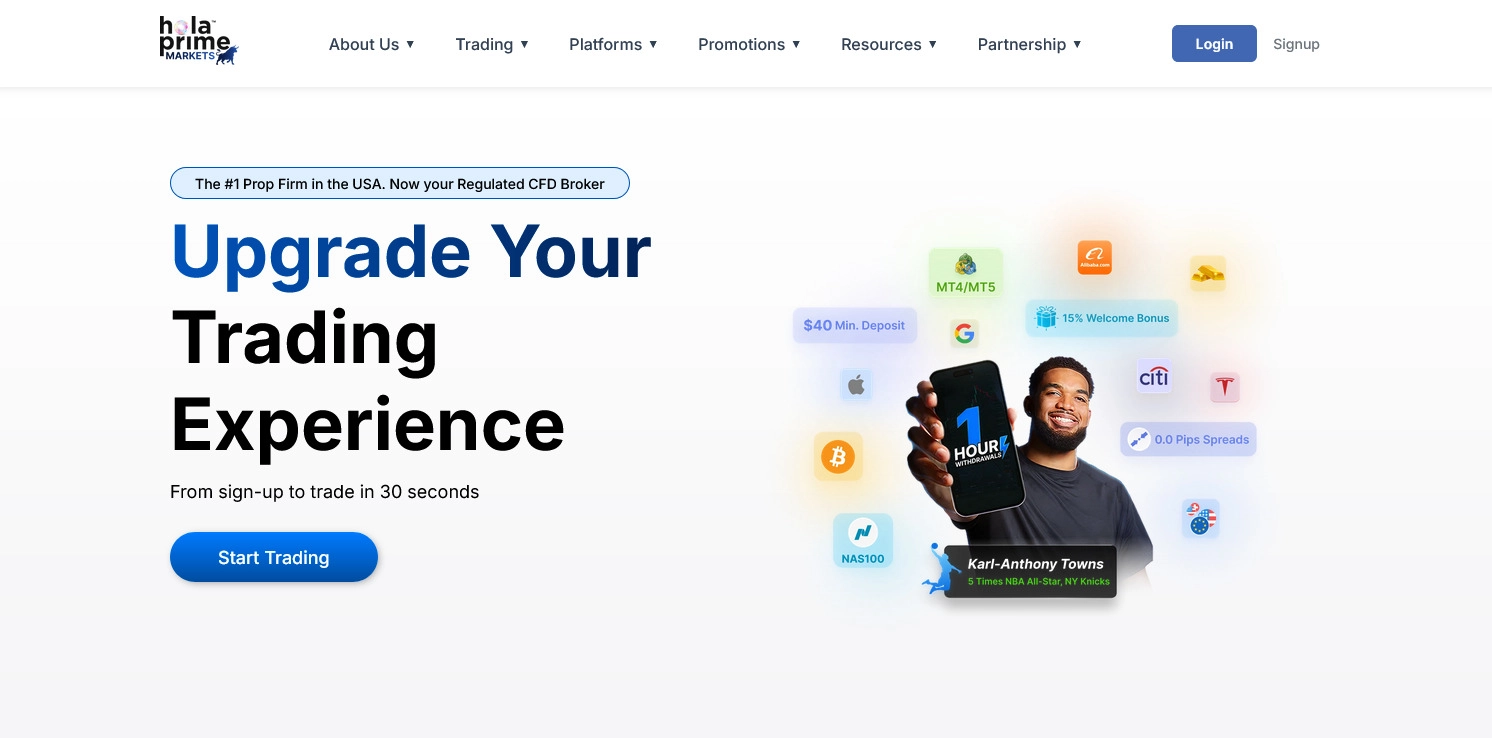
Hola Prime Markets launched in 2024 and is based in Mauritius. It’s often marketed for low minimum deposits (as low as $40 on some accounts), tight spreads on major pairs, and access to high leverage, depending on the instrument and account setup. It’s also offshore-regulated under the Financial Services Commission (FSC) in Mauritius, which affects the strength of investor protections and how you should think about risk.
This review is for you if you’re new to forex, want MT4 or MT5 access, prefer a low-deposit start, or like funding by crypto. Be cautious if you live in a restricted country (including the US and several others) or you only want top-tier regulation from major onshore regulators.
Hola Prime Markets snapshot, what it is, where it is based, and who can use it
Hola Prime Markets is the CFD brokerage side of the Hola Prime group, where you open an account, deposit your own funds, and trade markets like forex and CFDs. The broker was established in 2024 and is headquartered in Mauritius, operating under the Financial Services Commission (FSC) Mauritius.
The company also lists a wider international presence (offices mentioned across regions such as Hong Kong, Dubai, Cyprus, India, the UK, and the Comoros). Treat that as a footprint for business operations and support, not as proof of stronger regulation in each location. For safety and legal clarity, what matters most is the licensed entity and the regulator supervising it.
Access is broad, but not universal. Hola Prime Markets states it accepts clients globally, while excluding the United States and other jurisdictions listed on its site materials, including India, China, Singapore, and the Philippines, plus many countries associated with FATF blacklists and sanctions. If you’re unsure, don’t guess, check the broker’s current restricted-country list before you apply.
A quick eligibility checklist before you sign up:
- Residency: Your country must not be on the restricted list (the US is typically excluded).
- KYC documents: You must be able to pass identity and address checks without delays.
- Funding method: Confirm you can deposit and withdraw using the available rails (often crypto like BTC, ETH, LTC, USDT, plus bank wire and some regional methods such as Kora in parts of Africa).
One more reality check: third-party traffic tools sometimes show visitors from countries that appear restricted. Rules can change, and visitors are not the same as approved clients, so always confirm the latest terms on the official pages before starting verification.
Regulation and safety basics, what FSC Mauritius does and does not cover
Being licensed by FSC Mauritius means the broker is under a regulator and must meet certain requirements. At the same time, it’s generally viewed as lighter oversight than major onshore regulators (for example, the UK or Australia). Think of it as a set of guardrails, not a guarantee.
Practical steps that reduce surprises:
- Verify the license in the FSC register and match it to the broker’s stated details (Hola Prime materials cite licence GB24203729 for an Investment Dealer authorization).
- Confirm the legal entity name shown across the broker’s key pages (regulation, terms, client agreement). Some pages across the group have used slightly different naming, so match what you see to the register.
- Read the Client Agreement and risk disclosures before funding, especially around execution, margin calls, and complaint handling.
- Test withdrawals with a small amount first, then scale up only after the process feels consistent.
Hola Prime Markets advertises negative balance protection, which can help in fast moves. Still, gaps and sudden volatility happen, so keep your own risk tight (position sizing, stops, and realistic leverage).
Leverage at Hola Prime Markets, why the numbers can look confusing
Leverage is one of the biggest reasons traders look at offshore brokers, and it’s also where confusion starts. Brokers often show different leverage depending on the instrument, your account equity, and sometimes your region or internal risk settings. Add marketing pages to the mix, and the numbers can stop lining up.
With Hola Prime Markets, you’ll see high leverage advertised, but the disclosures aren’t always consistent across pages. Some materials cite leverage up to 1:500 (often broken down by instrument, for example higher on FX majors, lower on exotics). Elsewhere, there’s also a “2000x” style promo tied to smaller equity levels, which doesn’t match the more conservative figures shown on trading-conditions pages. In practice, the only number that matters is the leverage you can actually select and that the platform applies to your symbols.
Here’s the safer way to treat leverage before funding:
- Check leverage per instrument inside the client portal or symbol specs (FX, indices, metals, energies, crypto, stocks can all differ).
- Confirm margin requirements for the exact symbol you trade (NAS100 vs US30 vs XAU/USD can be very different).
- Ask about weekend and rollover changes, because margin can increase when markets are closed or liquidity is thin.
- Expect much lower leverage on crypto and stock CFDs, often in the neighborhood of 1:5 at many CFD brokers (and sometimes lower during volatile periods).
- Screenshot the current contract specs and leverage (symbol info window, margin rates, trading conditions). Keep it with your deposit record so you have proof of what you saw at the time.
Leverage multiplies everything. A small move against you can hit like a much bigger one. If you’re new, start with low leverage and treat higher settings like a power tool, not a default.
For risk limits, keep your own rules simple and strict:
- Use stop-losses on every trade you can.
- Risk small per trade (many traders stick to 0.5% to 1% of account balance).
- Remember Hola Prime Markets states negative balance protection, but fast markets can still produce slippage and poor fills around news, opens, or sudden gaps.
Spreads and real world trading conditions, what to expect on popular symbols
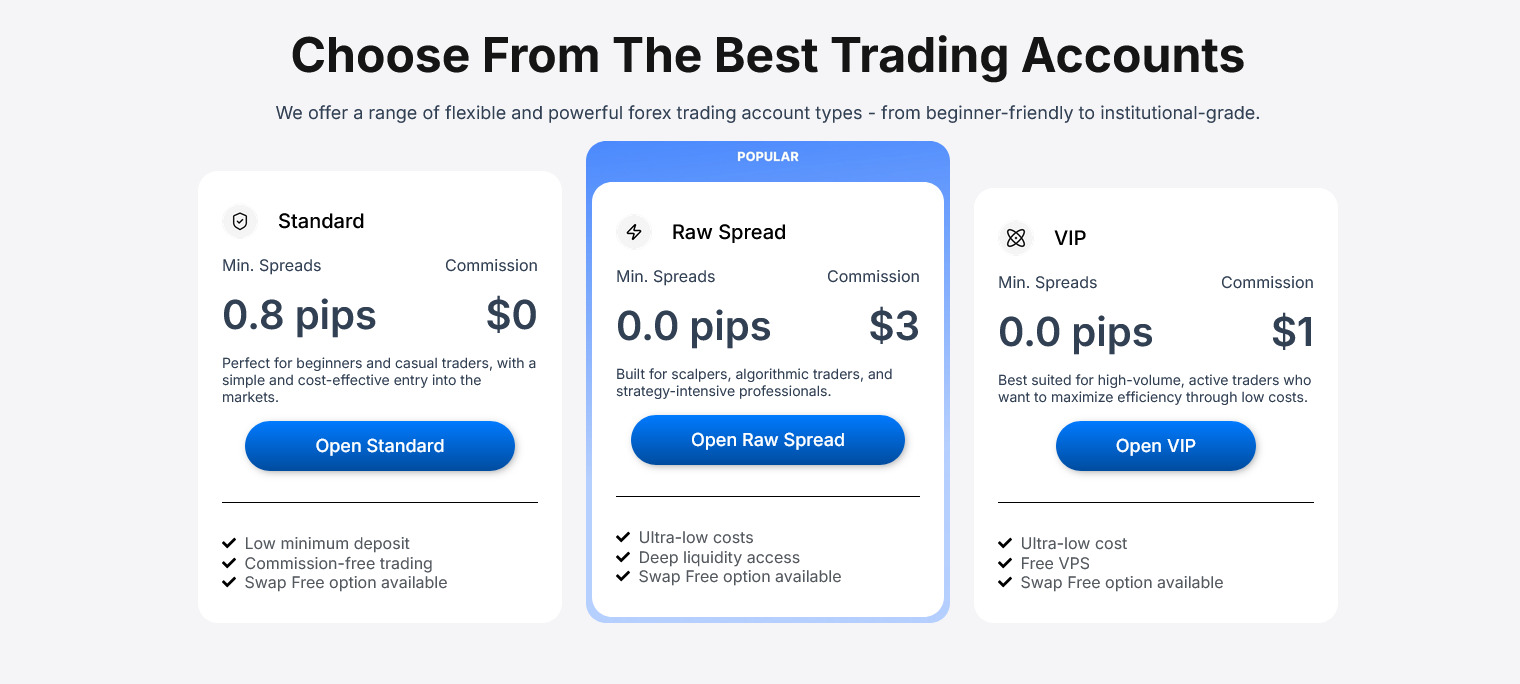
Spreads are the “entry fee” you pay every time you trade, and they change all day. Hola Prime Markets promotes low pricing, and it lists account types that fit the usual pattern: Standard accounts with wider spreads but no commission, and Raw accounts with tight spreads plus a per-lot commission.
In real use, set your expectations like this:
- Major forex pairs (like EUR/USD) can be very tight on Raw pricing during liquid hours, but they won’t stay tight 24/7.
- Gold (XAU/USD) often trades wider than majors and can jump during US session opens and big macro news.
- Index CFDs can be stable in normal hours, then widen sharply around cash opens, major data releases, and end-of-day flows.
- Energy CFDs (WTI, Brent, natural gas) can be jumpy. News headlines and inventory events can widen spreads fast.
- Crypto pairs trade around the clock, but spreads can still expand during sudden spikes and low-liquidity moments.
- Stock CFDs usually behave best during regular US market hours, and can get pricey around the open and close.
Also, don’t confuse minimum spreads with what you’ll actually pay. A “from 0.0” or “from 0.8” number is a best-case snapshot, not a promise. Your costs depend on timing, volatility, and the symbol.
One practical habit helps more than any review: track spreads during the hours you really trade. Watch your top 3 to 5 symbols for a week, log the spread at entry, and compare it to the broker’s advertised pricing. You’ll learn quickly whether your strategy fits the real conditions.
Deposits, withdrawals, support, and the main pros and cons (quick decision section)
For a newer offshore broker, the basics matter most: can you fund the account easily, get money out without drama, and reach support when something looks off? With Hola Prime Markets, funding often centers on crypto, with bank wire and a few region-specific options also showing up, depending on where you live.
Deposits and withdrawals: Expect to see crypto rails like BTC, ETH, USDT, and sometimes other coins mentioned on different pages. Crypto can be quick, but it comes with two real-world risks: network fees (they can spike) and address mistakes (one wrong character can mean a lost transfer). If you prefer traditional banking, bank wire is usually the fallback. Some regions may also see local options like Kora (commonly referenced for parts of Africa). The broker often markets funding methods as free on its side, but remember, your bank or the blockchain can still charge fees.
Support: Hola Prime commonly promotes 24/7 live chat, plus email and phone. In practice, start with the FAQ for account rules and platform setup, then use chat for anything time-sensitive (platform access, missing deposits, withdrawal status). If an agent makes a promise, keep proof (more on that below).
Quick pros and cons (brokerage view):
- Pros: low minimum deposit on some accounts (often around $40), multiple platform options (MT4/MT5 are central), broad CFD list (forex, indices, metals, energies, crypto, stock CFDs), a swap-free/Islamic account option, and stated permission for EAs, hedging, scalping, and news trading on brokerage accounts.
- Cons: offshore regulation (FSC Mauritius is lighter than top-tier regulators), a short track record (founded 2024), jurisdiction limits (US and other restricted countries), plus some site inconsistencies (entity naming varies across pages, and leverage figures can conflict between “up to 1:500” style disclosures and higher promotional figures).
Swap free account details, who it fits and what to watch for
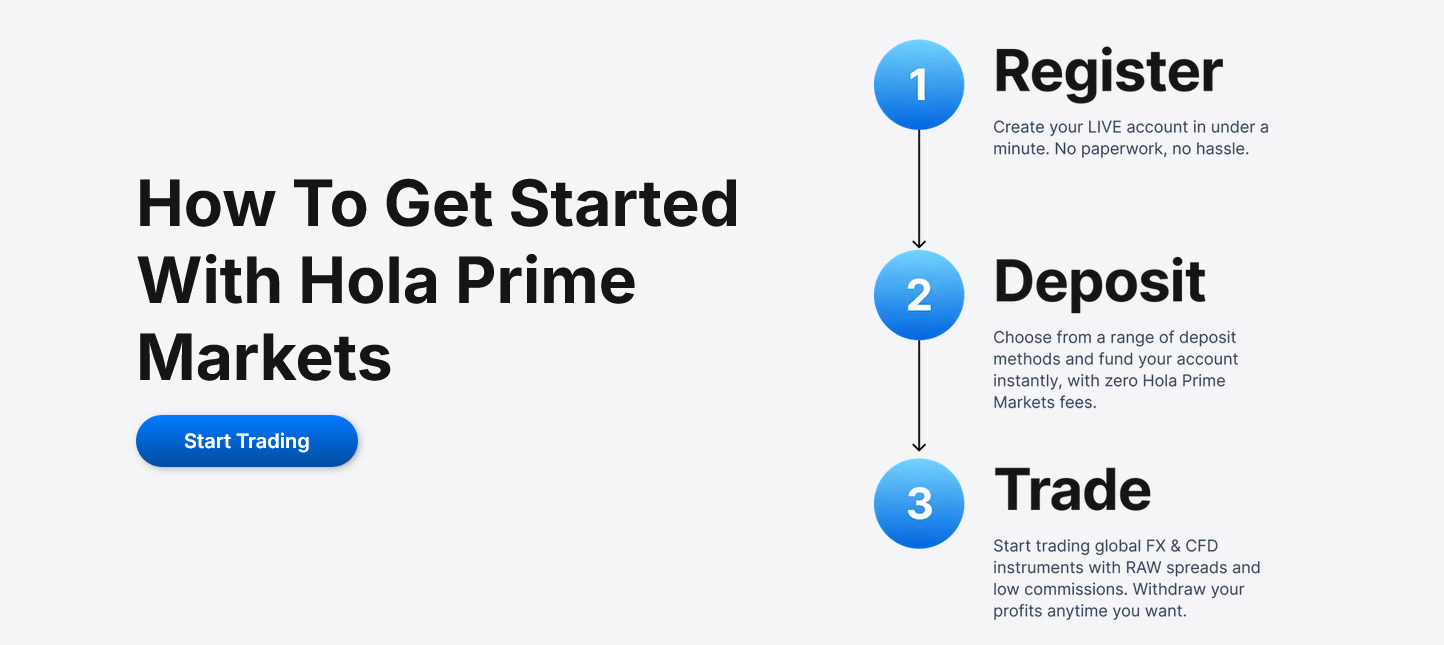
The Swap Free/Islamic account is built for traders who don’t want overnight interest-style swaps, often for Islamic finance reasons. Instead of swaps, the broker may charge an admin fee (and the fee can vary by symbol).
Two things to do before you commit to Swap Free:
- Ask support for the admin fee schedule by symbol, including majors, gold, indices, and crypto if you trade them. Don’t settle for a general answer.
- Confirm whether holding time limits apply, because some swap-free setups only stay “swap-free” for a set number of days, or fees change after a threshold.
Swap free doesn’t mean free. You still face the same price risk, and the replacement fees can be higher than normal swaps on some markets. If you hold trades for days, treat it like packing for a trip. Check the weather first, because surprises get expensive.
Platforms, tools, and trading experience (MT4, MT5, cTrader options, apps)
Hola Prime Markets centers its trading experience on MetaTrader 4 (MT4) and MetaTrader 5 (MT5), which are still the most common picks for retail forex and CFD traders. Across the wider Hola Prime group, you may also see cTrader, DXtrade, and Match-Trader mentioned for certain services, sometimes provided via a separate platform vendor rather than the broker’s core MetaTrader stack. That detail matters because platform access can depend on which product you open (brokerage account vs other services) and which entity is providing the platform.
The broker also promotes a proprietary mobile app on iOS and Android in some materials. If you mostly trade from your phone, focus less on the marketing and more on whether the app has the basics done well: stable charting, clean order entry, and clear margin and P&L.
No matter which platform you choose, check these practical items first:
- Order types: market, limit, stop, and how you set stop-loss and take-profit.
- Charting tools: timeframes you use, indicators, and quick drawing tools.
- Risk controls: margin display, one-click close, and alerts.
- Automation support: EA support, VPS compatibility, and easy log files for troubleshooting.
- Stability: reconnect behavior, price freezes, and how it handles news spikes.
MT4 vs MT5 for beginners, which one to pick at Hola Prime Markets
If you’re brand new, MT4 feels simpler. It’s lightweight, familiar, and has a huge library of forex indicators and older Expert Advisors (EAs). It’s a comfortable first car.
MT5 is usually the better default pick at Hola Prime Markets because it’s built for a broader market setup and adds more built-in tools. You get improved strategy testing, more order handling features, and it’s generally a smoother fit if you plan to trade beyond basic forex.
A simple rule that avoids regret: start with MT5 unless you already need a specific MT4-only EA.
To get confident fast, keep your first week boring on purpose:
- Start on demo, and place at least 20 trades to learn the buttons and order flow.
- Learn position size before anything else, because lots control risk more than “good entries.”
- Set price alerts for key levels so you don’t stare at charts all day.
Algorithmic trading and fast strategies, what the broker says is allowed
A lot of traders want clear rules on faster styles. In plain terms:
- Expert Advisors (EAs) are trading robots that place and manage trades for you.
- Scalping means short holds and frequent trades, often aiming for small moves.
- Hedging means holding buy and sell positions at the same time (often on the same symbol).
Hola Prime Markets’ account materials state that hedging, scalping, news trading, and EAs are allowed on its brokerage accounts. That’s a big deal if your strategy depends on quick entries or automation.
Still, don’t treat “allowed” as “anything goes.” Before you go live, read the terms for any limits tied to execution behavior (latency tricks, excessive requests, or other abusive patterns). Then test like a pro: trade small size during high-volatility periods (major news or session opens) and watch spreads, slippage, and fills before you scale up.
Markets you can trade, leverage, and risk limits to understand before you deposit
Hola Prime Markets positions itself as a multi-asset CFD broker, so you’re not limited to just EUR/USD. On the brokerage side, the menu is broad enough for most retail traders: 40+ forex pairs, 10+ crypto pairs, index CFDs, metal CFDs (gold and silver), energy CFDs (WTI, Brent, natural gas), and 50+ stock CFDs tied to large US-listed companies.
A quick note on what you’re trading: CFDs (contracts for difference) track the price of an underlying market, but you don’t own the asset (no shares, no coins, no barrels of oil). You’re trading price moves, which makes it flexible, but also means costs like spreads, commissions, and overnight fees can matter more than people expect.
How to test a broker like Hola Prime Markets safely in your first week
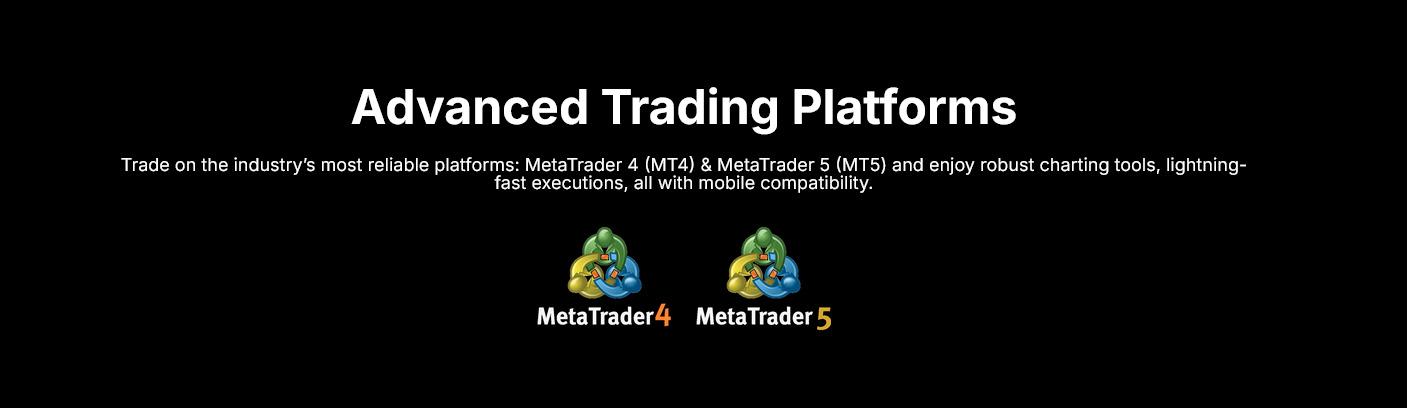
Treat week one like a test drive, not a road trip. Your goal is to verify the money flow and execution where you trade.
- Open a demo first and place at least 10 to 20 trades on your usual pairs.
- Create a live account and finish KYC early, don’t wait until you need a withdrawal.
- Make a small live deposit using your preferred method (crypto or bank wire).
- Trade the smallest size available and avoid holding big positions overnight.
- Test one deposit and one withdrawal right away, even if the withdrawal is small. You’re checking the process, not the profit.
- Check spreads during your trading hours (London open, New York open, or your normal window). Log what you see on your top 3 symbols.
- Verify slippage using limit orders at busy times. Compare requested price vs filled price in your trade history.
- Use live chat for any unclear fee or rule, then save transcripts and screenshots of answers, especially around withdrawals and leverage.
- Avoid overleveraging, even if high leverage is available. Keep risk per trade small (many traders stay near 0.5% to 1%), because leverage can turn a small mistake into a fast margin call.
Conclusion
Hola Prime Markets is a newer offshore CFD broker (founded in 2024) that targets traders who want a low start (often around a $40 minimum deposit), MT4 or MT5 access, and a solid mix of markets, including forex, indices, metals, energies, crypto pairs, and stock CFDs. It’s a good fit if you’re comfortable with Mauritius FSC oversight, and you prefer flexible features like swap-free account options and stated permission for EAs, scalping, and hedging.
It’s not a good match if you live in an excluded country (the US is commonly listed, along with several others), or if you only want top-tier regulation and stronger investor protections found in major onshore hubs.
Before you fund, do the boring checks that prevent expensive mistakes. Confirm your country is eligible, then verify the FSC Mauritius license details and matching legal entity name (materials cite license GB24203729). Check leverage per instrument inside the platform or contract specs, since leverage numbers can differ across pages. Test deposits and withdrawals early, keep screenshots, and save chat transcripts.
Start with a demo, then deposit small, then scale only after a smooth withdrawal and consistent execution.

ADFX

Salma Markets
From $10 · MT5
Trust Capital
From $1 · MT5
MaxifyFX
From $15 · MT5
BBS Markets Forex Broker...
From $10 · MT5
Kato Prime
From $15 · MT4
HeroFX
From $50 · MT4
TabTrade
From $1 · MT5
Elev8
From $25 · MT5Frequently Asked Questions (FAQ)
What are the most popular brokers for day trading?
Want to start day trading? Here are the 5 best brokers for day trading, based on our findings. From commissions and fees to platform features, these brokers have it all!
Which brokers offer the lowest commissions?
Get a list of trending broker sites that we review and rank based on their quality, trustworthiness, and ease of use. We also provide you with a link to each site so you can get started right
What are the best trading platforms for beginners?
Unsure of which trading platform to choose as a beginner? Check out our list of the best platforms for beginners, complete with reviews and ratings from real traders.
What are the fees associated with day trading?
Reviews of the best day trading brokers. Read our reviews to find out which broker is right for you.What are the fees associated with day trading? Day trading is a risky business, and it takes a lot of practice before you can become successful at it. However, there are some things
What is a margin call and why do they happen?
A margin call happens when you have borrowed more money than you can pay back. Learn about the risks of trading on margin here.