cTrader, MetaTrader 5 (MT5), MetaTrader 4 (MT4)
Apple Pay, Crypto, PayPal, Astropay, Credit/Debit Card, Google Pay, Perfect Money
N/A
If you’re searching for FundedNext prop firm reviews, you probably want the same things every serious trader wants, clear rules, real payout proof, and no surprises after you pay the fee. This is a practical, plain-English review of FundedNext as of January 2026, focused on what matters when your account is on the line.
A prop firm is a company that lets you trade using its capital after you pass a set of rules (often through an evaluation challenge), then you keep a share of the profits. You’re paying for a chance to qualify, not depositing into a broker account, so the rulebook is the product.
This review is for intermediate to advanced traders, system traders (EAs and algos), and disciplined discretionary traders who already understand drawdown control. We’ll cover how FundedNext’s evaluation and instant funding options work, what the daily loss and overall drawdown limits look like (they vary by program), and how payouts really work in practice (FundedNext advertises very fast processing, with many reports of payouts landing within hours). We’ll also look at platforms (MT4/MT5 are supported), tradable markets (forex plus popular CFDs like indices, metals, and commodities, plus crypto and futures options), fees (including refundable evaluation pricing), and trust signals (history since 2022, global user base, and public track record of payouts).
Light risk note: prop firms aren’t regulated like brokers, and many accounts are simulated, so read the rules closely before you trade.
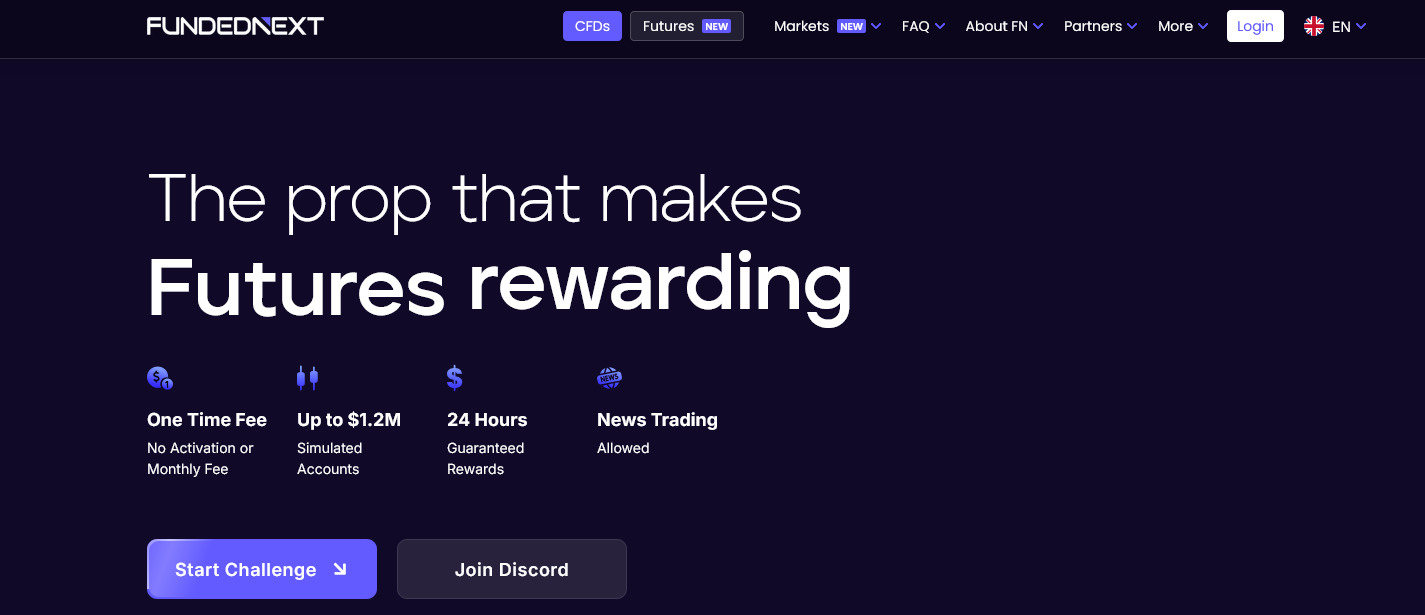
FundedNext is a proprietary trading firm built around a simple trade-off: you follow a strict rulebook, and in return you get access to larger buying power than most personal accounts allow. Traders tend to consider it because the programs are clearly packaged (evaluation or instant funding), the rules are written down up front, and payouts are widely discussed across trading communities.
Here’s the quick snapshot most traders look for:
 Where FundedNext is based, who runs it, and what that means for trust
FundedNext is commonly described as being operated by a UAE-registered entity, often referenced as GrowthNext F.Z.E. (Ajman Free Zone). In platform and service details, a regional Cyprus presence also shows up, with Incenteco Trading Ltd appearing in some trading infrastructure references.
Why should you care? Location and operating entities can affect:
At the same time, it helps to keep expectations grounded. A prop firm isn’t the same thing as a regulated broker. You’re paying for a trading simulation challenge and a performance-based reward model, not opening a brokerage account in your own name.
If you’re trying to answer “legit or scam?” skip the opinions and check what you can confirm yourself. A practical checklist:
Many reviews also describe common anti-fraud controls, such as KYC checks, AML screening, trade monitoring, and IP/device controls to reduce multi-account abuse. Watch for fake or repetitive reviews on any platform, good or bad. If you’re on the fence, a smart way to test is starting with the smallest plan and treating the first run as a process check, not a payday.
FundedNext mainly gives you two paths to a funded-style account: evaluation challenges (1-step or 2-step) and instant funding (often branded as Stellar Instant). Your choice changes the pace, the risk rules, and how forgiving the drawdown feels day to day.
One thing many traders miss: the settings you choose upfront usually carry into the funded stage. That means if you pick a certain drawdown model, platform, or account type, you’re often living with it later. Pick like you’ll be stuck with it, because you might be.
If you want a quick “comparison table” in your head (not a literal table), think of it like this:
With evaluation challenges, you pay a one-time fee to trade under a rule set. If you hit the profit target without breaking drawdown or other rules, you move on to the next phase (2-step) or qualify after one phase (1-step).
Most reviews point to the same pattern:
Minimum trading days also show up a lot in trader feedback. A common example is five active trading days on some evaluation types (some 1-step structures may have fewer). This rule pushes you away from “one lucky trade” passing the whole challenge.
A big reason FundedNext gets mentioned is the no maximum time limit on many challenges. That helps if you trade slower, like a swing trader waiting for clean setups, or a day trader who only takes A+ entries. You don’t have the clock pressuring you into low-quality trades.
The downside is psychological: no deadline can feel like infinite runway. If you treat it like endless retries, you can start overtrading, taking weak setups just because you “can always keep going.” The fix is simple: trade it like you have a deadline anyway, keep a weekly trade limit, and protect your drawdown buffer.
Instant funding is the shortcut version. You pay the fee and get access to an account right away, with no profit target to “pass” first. FundedNext’s Stellar Instant is commonly described as using a trailing drawdown style (often cited around a 6% trailing limit).
Trailing drawdown changes how the account feels. When your balance rises, your maximum loss line can move up too. That’s great when you trade clean and protect gains. It’s brutal if you spike profit, then give it back.
Instant funding tends to fit:
It’s a poor match for:
Before you buy, read how the drawdown is measured: balance vs equity, and trailing vs static. Those definitions decide whether a temporary floating loss can breach you. And remember, if you break the rules, the account is typically closed and you’re buying again.
FundedNext is often discussed as having a clear growth ladder. Commonly cited numbers in reviews and summaries include:
Scaling is rarely “make one good month and you’re done.” It usually looks like this in plain terms: trade for multiple months, grow the account while keeping drawdown under control, and collect more than one payout along the way. FundedNext’s scale-up criteria is often described in four-month review cycles, with requirements tied to cumulative growth, at least two payouts, and finishing the last cycle in profit.
If your goal is bigger capital, the best approach is boring: protect the downside, keep position sizing steady, and treat every rule like it’s the real strategy.
FundedNext accounts live and die by risk rules. The profit targets matter, but the daily loss limit and overall drawdown are the real gatekeepers. Most breaches don’t happen because someone “can’t trade.” They happen because position size crept up, a loss streak hit, and the trader didn’t adjust fast enough.
Leverage plays into this too. Many evaluation-style models are often cited as offering up to 1:100 on forex, while some instant-style accounts are commonly shown with lower leverage (often 1:30). Higher leverage doesn’t force you to risk more, but it makes it easier to do it by accident.
Think of the daily loss limit as your “today” circuit breaker, and the overall drawdown as your “account lifetime” guardrail.
Here are simple round-number examples using the ranges commonly seen across programs (3% to 5% daily, 6% to 10% overall):
The part that trips people up is how the loss is calculated:
If your program uses equity-based loss limits, open trades matter more than your opinion. A wide stop, a basket of correlated positions, or holding through a volatile window can hit the limit before you can react.
A quick self-checklist that saves accounts:
A static drawdown is a fixed floor. It stays in the same place, as long as the rules don’t say otherwise.
A trailing drawdown moves up as you make money. Kid-simple analogy: it’s like walking a dog on a leash while you climb stairs. When you step up to a higher stair (profit), the leash anchor moves up too. If you fall back too far (give back profits), the leash goes tight and stops you.
This is why trailing drawdown punishes “big win, big giveback” trading. You can have an amazing morning, then one oversized afternoon trade takes you out, because the max loss line already moved up.
Practical ways to trade with trailing drawdown:
Permissions depend on the exact model, and the fine print matters more than social media summaries.
Here’s what’s commonly highlighted in reviews and rule summaries:
Copy trading is usually where people get surprised. In plain terms, the common structure is:
Finally, don’t ignore the obvious: account sharing is typically prohibited. One “helpful friend” logging in can create flags you don’t want, even if your trading is clean.
Rules get you to the finish line, but payouts and costs decide whether it’s worth running the race. With FundedNext, the big talking points are the progressive profit split (up to about 90%), the evaluation-phase reward some traders mention, and the frequent claim that withdrawals land in hours, often inside 24 hours. The details matter because your real result is always the net number after commissions, platform fees, and any withdrawal charges.
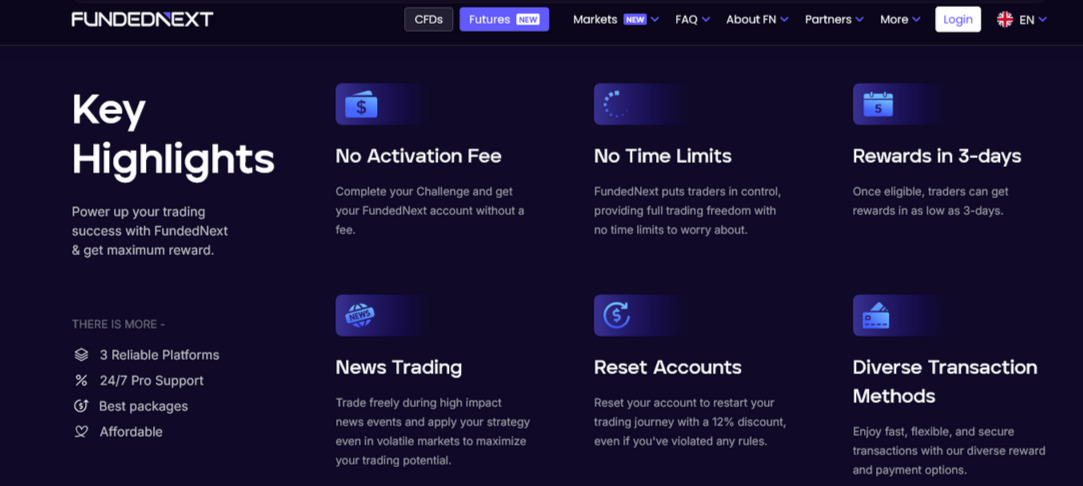
FundedNext’s profit split is often described as progressive, which is just a fancy way of saying you may start lower and earn a higher cut after you prove you can stay consistent.
A common structure shared in reviews looks like this:
If you’re comparing prop firms, this matters because two traders with the same raw PnL can walk away with different cash based on payout number. Think of it like a loyalty rate, the longer you stay clean and profitable, the more you keep.
Another headline feature people bring up is the evaluation-phase reward, often described as 15% paid during the challenge (commonly framed around the starting balance in program descriptions). Keep your expectations straight here: that’s not the same as being fully funded. You’re still in the evaluation stage, still under strict drawdown rules, and still trying to qualify.
One practical tip that saves disappointment: track net performance, not the headline split. Your take-home is affected by spreads, commissions, and any platform fees, so your “90%” can feel smaller if your strategy trades often or targets small moves.
Payout eligibility usually comes down to three things: you’re in profit, you didn’t break drawdown rules, and you followed the withdrawal schedule for your account type.
FundedNext payout timing gets a lot of attention because many traders report quick processing. You’ll see claims of payouts arriving in a few hours, with marketing and reviews often mentioning a 24-hour processing guarantee. Bank rails can still take longer than crypto or e-wallet style methods, but the firm-side approval is the part people say is fast.
Some program descriptions also mention Benchmark Days, which are basically “proof-of-work” days. The idea is simple: you need a certain number of days where you close at least a minimum profit before you can request a withdrawal. Common examples cited include targets like:
Common payout mistakes show up again and again:
Treat payout day like a checklist day, not a trading day.
On cost, the big number is the evaluation fee. Across reviews, FundedNext pricing is usually described as low entry for small accounts and higher for larger accounts, with a typical range around $49 up to about $1,099, depending on size and settings. Many plans advertise the fee as refundable after you pass and get accepted into a funded-style account, so it can feel like a “performance deposit” if you succeed.
Withdrawals can have friction too. Some sources cite a platform withdrawal fee around 3.5%. If you withdraw in crypto, you may still pay network fees, which are outside the firm’s control and vary by chain and traffic.
Then there are trading costs, which can quietly matter more than the entry fee if you trade frequently:
Before you choose an account, do a quick expectancy check using your own stats: average trades per month, average lots, and typical holding time. A high-frequency strategy can “win” the profit split battle and still lose the net profit war.
FundedNext’s day-to-day trading experience comes down to three things: what you can trade, where you place trades (platform choice), and how easy it is to get answers when rules, payouts, or platform issues pop up. If you’re used to broker accounts, think of this as trading under a tight rulebook with extra monitoring, where the platform and dashboard matter almost as much as your strategy.
FundedNext is built for traders who want variety without hunting for exotic, low-liquidity products. Many reviews and program summaries mention instrument lists that can run 100+ symbols, spread across the markets most prop traders actually use.
The main categories and why they matter for strategy choice:
Before you commit to a plan, check contract specs, session times, spreads/commissions, and swap rules inside the dashboard. Those details decide whether a strategy that looks good on paper stays profitable after costs.
Most traders will recognize the platform lineup right away. MT4 and MT5 are commonly listed, and some sources also mention cTrader or Match-Trader availability depending on the program.
Platform fit is usually simple:
Where FundedNext tends to help is the dashboard and rule tracking. Look for features like drawdown tracking, payout eligibility status, calculators, and account notifications, since they reduce “I didn’t realize I was close to breach” mistakes.
FundedNext commonly advertises 24/7 support, usually via live chat and email, plus a Help Center for rules, payouts, and platform setup. Community channels (often mentioned as Discord, Telegram, and social groups) can be useful when you want fast peer answers on common issues.
Some sources also describe AI help tools, including a chatbot and an AI voice assistant (often referenced as “Fundee”), designed for quick questions like drawdown definitions, payout steps, or which actions trigger a breach.
If you run into payout or account issues, keep it simple:
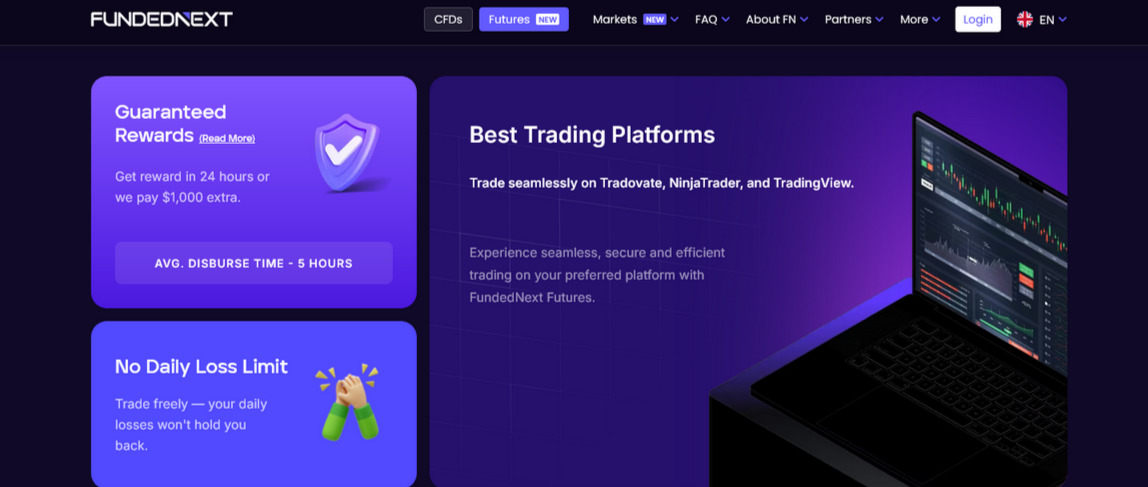
FundedNext prop firm reviews tend to land in the same place, it’s built for traders who can follow rules without drifting. The upside is clear: no time limit on many challenges, EA support on MT4 and MT5, a strong long-term profit split that can reach 90% after you establish a payout history, and a rare evaluation-stage reward that pays a small share while you are still in the challenge. Add the commonly reported fast withdrawals (often within hours, with a stated 24-hour processing promise), plus a scaling path that can grow allocations far beyond the starting account, and it’s easy to see why it gets attention.
The trade-off is just as clear. Drawdown rules are tight (daily limits often sit in the 3% to 5% range, with overall caps commonly 6% to 10%), accounts are typically simulated, and the fee details matter (including a withdrawal fee often cited around 3.5%). Program settings vary, so the “best” option depends on how your strategy behaves under pressure, especially with trailing drawdown.
Next steps checklist: Pick the program that matches your style. Read the drawdown definition (balance vs equity, trailing vs static). Start small, treat it like live risk. Track daily risk and stop trading before the limit gets close.
A spread is the gap between the Bid price and the Ask price. It’s one of the main costs you pay when you open or close a trade. A smaller (tighter) spread usually means lower trading costs and better order fills. FundedNext provides competitive spreads that often compare favorably to many standard ECN accounts.
For the full list of current spreads by symbol, visit: https://fundednext.com/symbols
You can view live spreads directly inside MetaTrader by logging in with the details below.
The FundedNext Trading Competition comes with rules every participant needs to follow. Read them carefully before you start, since breaking any rule can lead to disqualification.
Daily loss limit = Last day's balance minus today's balance or equity
That daily loss limit is measured against your most recent end-of-day balance, then compared with your current balance or equity.
For the full list of FundedNext competition rules and details, review the official competition page: FundedNext Trading Competition.
No reviews yet. Be the first to review.